
Introduction
Tokenization is transforming the way businesses handle payments, data, and even ownership of assets. By converting sensitive information or real-world items into secure digital tokens, companies can reduce risk, improve efficiency, and open new investment opportunities. Now, with the SEC’s recent decision, tokenization is moving beyond theory into mainstream finance — allowing tokenized stocks to trade like ETFs.
What is Tokenization?
Tokenization replaces sensitive data or assets with a unique digital token.
- Example: A credit card number
1234-5678-9012-3456becomes a token likeTKN-987654321. - The token is useless if stolen, but it securely represents the original data inside systems.
Types of Tokenization
| Type | Description | Example |
|---|---|---|
| Payment Tokenization | Protects card and banking data during transactions. | Apple Pay, Google Pay |
| Asset Tokenization | Converts physical assets into blockchain-based tokens for fractional ownership. | Real estate, art, gold |
| Data Tokenization | Secures sensitive information like SSNs or medical records. | Healthcare systems |
| Equity Tokenization | Converts company shares into blockchain tokens with ownership rights. | SEC Innovation Exemption |
Benefits
- Security: Tokens are meaningless outside the system.
- Efficiency: Faster, streamlined transactions.
- Transparency: Blockchain tokens provide clear ownership records.
- Accessibility: Fractional ownership lets more investors participate.
- Liquidity: SEC’s decision enables stocks to trade like ETFs, with 24/7 access.
Visuals
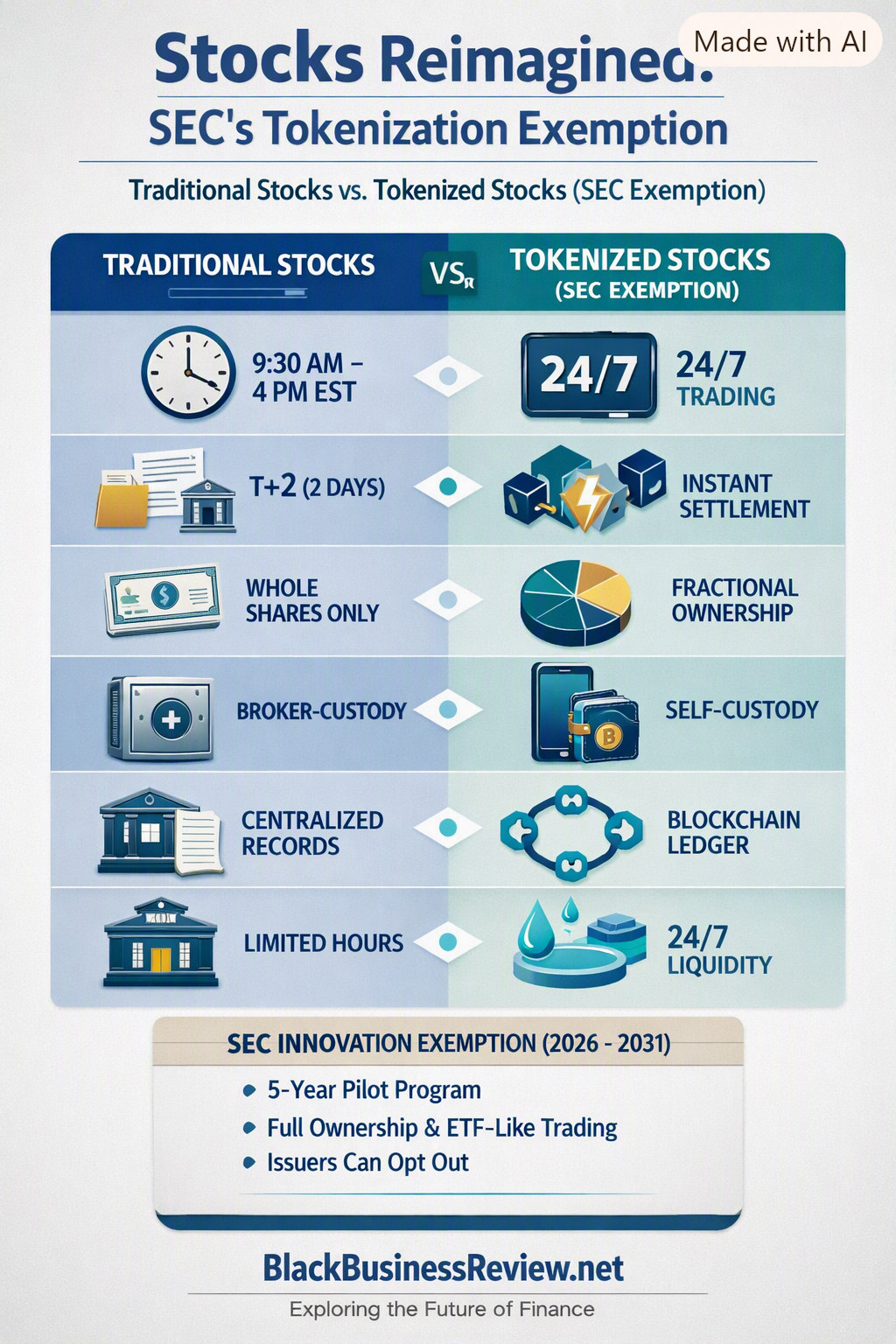
🚀 SEC’s Landmark Decision
On September 17, 2026, the SEC approved a five-year conditional exemption allowing certain U.S.-listed stocks to be tokenized and traded on blockchain platforms.

- Ownership rights remain intact: token holders get dividends, voting rights, and protections.
- ETF-like trading: Tokenized shares can be bought and sold like ETFs, but with blockchain settlement.
- Fractional ownership: Investors can own small portions of high-value stocks.
- 24/7 liquidity: Trading is no longer restricted to Wall Street hours.
Risks & Considerations
- Temporary framework: The exemption lasts five years; rules may change.
- Issuer objections: Companies can block tokenization of their shares.
- Investor protections: Disclosure and anti-leverage rules are mandatory.
Conclusion
Tokenization is no longer just a security innovation — it’s becoming a regulated financial reality. With the SEC’s decision, tokenized stocks can now trade like ETFs, combining the accessibility of traditional markets with the flexibility of blockchain. For BlackBusinessReview.net readers, this marks a turning point: tokenization is reshaping finance, ownership, and entrepreneurship, offering security, transparency, and new opportunities for wealth-building.