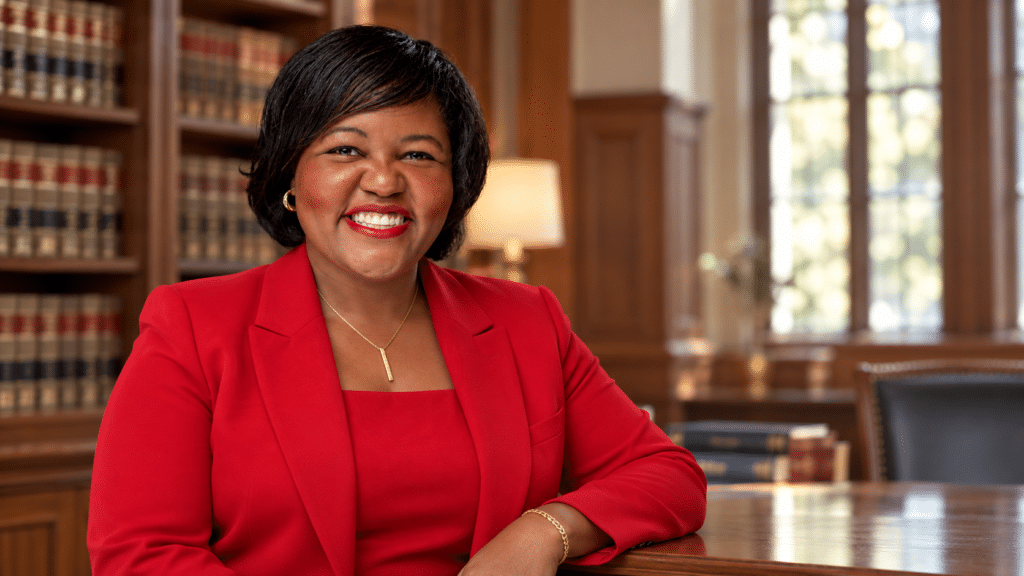
In her Lead Out Loud newsletter, Bethea connects economic ownership with a practical challenge: building businesses that can support the women behind them.
By Black Business Review
Tiffany Bethea is asking Black and Brown women entrepreneurs to move beyond the language of resilience and focus on the mechanics of building stronger businesses. Tiffany Bethea emphasizes the importance of strategy in entrepreneurship.
Tiffany Bethea’s Vision for Black Women Entrepreneurs
In an April 10, 2026, edition of her LinkedIn newsletter, Lead Out Loud, Bethea presented entrepreneurship as a response to exclusion while making a pointed distinction: determination alone does not produce sustainable revenue. Business ownership, she argued, needs a strategy capable of turning ambition into sales.
Tiffany Bethea believes that by implementing effective strategies, entrepreneurs can truly thrive in their businesses.
As Tiffany Bethea notes, building a successful business requires more than just determination; it requires a strategic approach.
Tiffany Bethea understands that without a plan, resistance alone will not lead to revenue generation.
This message is central to Tiffany Bethea’s philosophy on business ownership and economic empowerment.
Tiffany Bethea points out how systemic barriers have affected Black and Brown women in the workforce.
Through her initiative, Tiffany Bethea encourages women to seize control of their economic futures.
According to Tiffany Bethea, having a solid business model is crucial for sustainable growth.
Tiffany Bethea emphasizes that understanding customer needs is key to a successful business.
Her message, published under the headline “They’re trying to close the door. Let’s build our own,” combined a call for economic agency with an introduction to a private coaching offer called the Revenue Reset.
“But resistance doesn’t pay your bills without strategy. And legacy doesn’t happen without a plan,” Bethea wrote.
That observation is the central business argument running through her message. Starting a company can create a measure of independence. Building one that consistently supports its owner requires a different level of discipline.
Bethea opened the newsletter by describing what she views as an economic environment that has pushed Black and Brown women out of jobs, restricted their access to funding and marginalized their contributions. Those statements framed her appeal to women considering their next move or seeking greater stability through an existing business.
Her response was to encourage ownership and action. She described women turning toward their businesses and choosing to create opportunities when established paths appear to narrow.
Ultimately, Tiffany Bethea seeks to redefine success for women entrepreneurs.
The significance of that argument lies in what follows the initial decision to become an entrepreneur. A founder may bring professional experience, a strong network and deep commitment to her work. The business still needs paying customers, a clear offer and an approach to selling that can be repeated.
Bethea’s message places those practical demands alongside the emotional appeal of independence. It treats revenue as an essential part of the ownership conversation, rather than an uncomfortable subject to address after the inspiration fades.
Tiffany Bethea inspires women to recognize their potential beyond mere survival.
By following Tiffany Bethea’s guidance, entrepreneurs can build resilient and profitable businesses.
In the April announcement, Bethea said she was opening two to three private coaching spots for founders seeking to move from survival toward growth. She described the Revenue Reset as an individualized coaching experience focused on identifying a path toward substantially higher sales.
The announced starting price was $2,500. Bethea emphasized personal attention and a strategy built around the founder and her offer, rather than generalized advice.
Her description included the ambition of doubling or tripling sales. That language reflected the program’s promotional goal; the supplied newsletter excerpts did not include client results establishing those outcomes. The April announcement also does not establish whether the same pricing or openings remain available.

Even with those limits, the offer illustrates the specific problem Bethea wants to address: the distance between operating a business and having a deliberate plan to grow its revenue.
For founders, that distinction matters. A full calendar can reflect activity without demonstrating profitability. An engaged audience can create visibility without producing purchases. A compelling personal story can attract attention while leaving the commercial offer unclear.
The broader business question raised by Bethea’s message is whether the work a founder performs each day is connected to a model that can sustain her. Her emphasis on the individual offer brings that question into focus: What is being sold, who values it and how does the business translate that value into income?
The visible responses to the newsletter suggest that its ownership message resonated with readers. Candice Jackson Long, commenting beneath the post, connected the discussion to the long effort to gain access to spaces that had not been designed for them, then pointed toward becoming builders themselves. Another commenter, Beth Rheingold, expressed support from allies.
Those responses add a community dimension to a message centered on personal business decisions. Encouragement can help founders act, while relationships can create opportunities for introductions, collaboration and greater visibility. Neither substitutes for a functioning business model, but both can contribute to the environment in which one develops.
Bethea closed with an affirmation directed at the women she hopes to reach: “You were built for more than surviving, sis. Let’s make sure your business knows it too.”
Her challenge is to give that aspiration a commercial foundation. Ownership becomes more meaningful when the business can support its founder, serve its customers and continue operating beyond the urgency of the moment.
For the entrepreneurs addressed in her newsletter, the next step is the demanding work behind that vision: connecting purpose to an offer, an offer to customers and customers to sustainable revenue.
One connection can change everything. Join Orbit to connect with entrepreneurs, share opportunities and grow your network.
Related Posts

Cassandra Cummings, Black Female Founder Who Has Helped More Than 100,000 Women Invest, Launches National Wealth Initiative

The Blueprint for Rebuilding Black Economic Power: Episode 3 | Building Systems, Not Hustles