Ownership is the foundation of wealth.
Not applause. Not popularity. Not temporary income.
Ownership.
And when it comes to financial power in Black America, few institutions represent that principle better than Liberty Bank and Trust.
Founded in 1972 in New Orleans, Liberty Bank and Trust was built during a time when Black communities were still heavily shut out of traditional financial systems. Access to loans was limited. Business capital was scarce. Homeownership opportunities were uneven. The doors of mainstream finance were open—but often not for everyone.
Liberty stepped into that gap.
More than 50 years later, it has become one of the largest Black-owned banks in America, managing over $1 billion in assets and operating across multiple states. That’s not just survival.
That’s scale.
And scale in banking means power.
Because banks don’t simply hold money. They direct it. They decide which businesses grow, which neighborhoods get developed, and which families gain access to mortgages, credit, and financial opportunity.
That’s the real game.
For decades, Liberty Bank has quietly become one of the strongest examples of what Black-owned financial infrastructure can look like when it’s built for long-term impact. The institution has focused heavily on lending to churches, minority-owned small businesses, and individuals—three pillars that have historically anchored Black economic mobility.
That strategy matters.
Churches are often the cultural and financial heartbeat of Black communities. Small businesses are the job creators. Individual lending creates homeowners, investors, and wealth builders.
When you strengthen those three lanes, you strengthen the ecosystem.
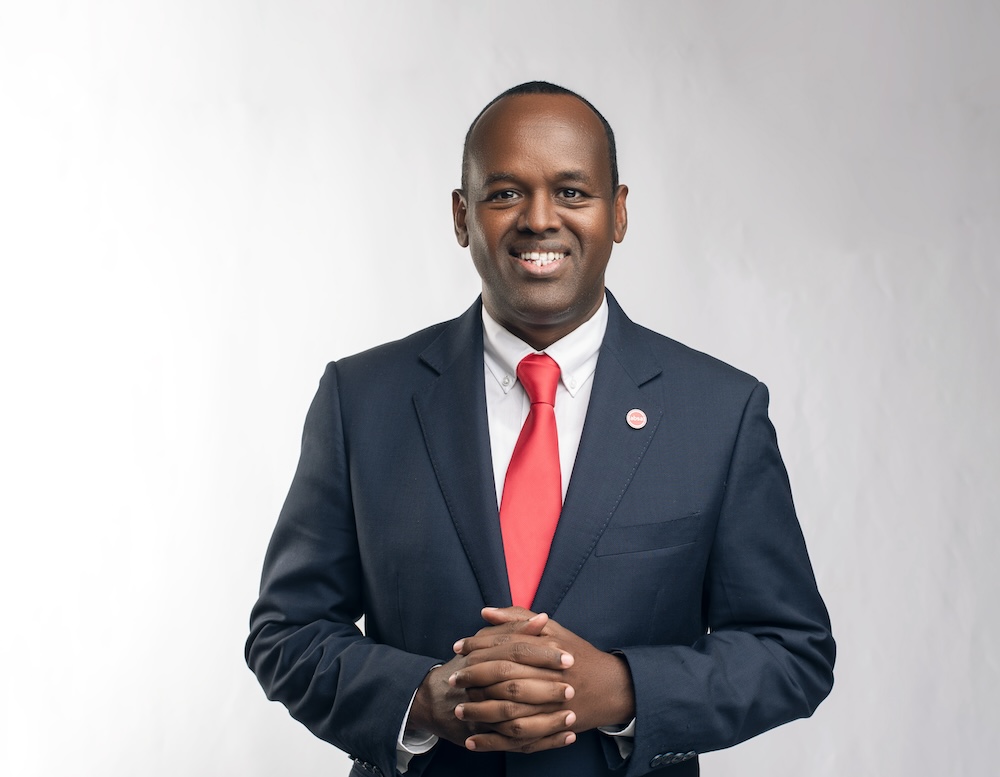
Liberty Bank and Trust: A Pillar of Community Empowerment
That’s what Liberty has done.
And unlike many institutions that chase high-margin corporate deals, Liberty’s model has remained rooted in community-based capital deployment. That means money stays circulating where it’s needed most.
That’s economic circulation.
And Black America has long struggled with that.
Studies have shown that the dollar moves through Black communities at a significantly slower rate than in other communities, often leaving almost as quickly as it arrives. That leakage weakens growth, limits reinvestment, and stalls wealth creation.
Banks like Liberty help slow that leak.
By financing Black-owned businesses, Liberty creates jobs.
By funding mortgages, Liberty creates homeowners.
By lending to churches, Liberty supports institutions that often reinvest directly into the community through housing programs, food assistance, education, and social services.

That’s how capital multiplies.
And make no mistake—this is still business.
Banking is one of the oldest wealth machines in the world.
If Liberty controls over $1 billion in assets, it means the institution has built significant leverage. Banks generate revenue through interest spreads, commercial lending, treasury management, fees, and long-term client relationships. Every loan originated becomes part of a much larger wealth engine.
This is why ownership in finance matters more than many realize.
It creates recurring income.
Predictable scale.
Long-term leverage.
And unlike trend-driven industries, banking is foundational. Every industry touches it.
Real estate.
Healthcare.
Construction.
Retail.
Technology.
Transportation.
Everything runs through capital.
And whoever controls capital controls opportunity.
That’s the bigger lesson of Liberty Bank.
Its existence proves that Black ownership in financial infrastructure is not theory—it’s execution.
While many conversations around Black wealth focus on consumer success, Liberty represents something deeper: institutional ownership.
That’s the shift happening now.
The next era of Black business will not be built only through celebrity brands or viral companies. It will be built through institutions—banks, funds, insurance firms, private equity, and media platforms—that create systems of ownership.
That’s the ancient truth.
Build the system, not just the product.
Liberty Bank and Trust has been doing exactly that since 1972.
Quietly.
Consistently.
Strategically.
And in today’s economy—where access to capital remains one of the biggest barriers for Black entrepreneurs—its role may be more important than ever.
Because every movement needs money.
Every vision needs funding.
And every community needs institutions that understand its value.
Liberty isn’t just a bank.
It’s a blueprint.
A living reminder that when Black communities own the institutions that move money, they move the future too.
BBR Black Wealth & Business Summit
Related Posts