NEW YORK — There is a moment in every great business story when the talent stops being the product and starts becoming the owner. Stephen A. Smith is living that moment in public. The kid from Hollis, Queens, who once argued in his college newspaper that his own coach should retire, is now the highest-paid voice in sports media — and, more importantly, a man building an empire designed to outlast any network’s say-so. His story is not just a media story. It is a business story about leverage, timing, and the long road from the beat to the boardroom.
From Hollis to the Inquirer Beat
Smith was born in the Bronx on October 14, 1967, and raised in Hollis, the youngest of six children of parents who came from St. Thomas in the U.S. Virgin Islands. He graduated from Thomas A. Edison High School in 1986, spent a year at the Fashion Institute of Technology, and then won a basketball scholarship to Winston-Salem State University — an HBCU, and a decision that still echoes through everything he does. There he played for the legendary Clarence “Big House” Gaines, until a severe knee injury ended his playing career. The pen took over early: even as a player, he wrote a column for the student newspaper, The News Argus, arguing Gaines should retire for health reasons. The audacity was there from the start.
He graduated in 1991 with a degree in mass communication and went into the grind that raised generations of Black sportswriters: the Winston-Salem Journal while still in school, then Greensboro, then the New York Daily News covering high school sports. In 1994, The Philadelphia Inquirer hired him, and over 17 years he climbed the ladder that almost nobody climbed — from 76ers beat writer, to NBA columnist, to general sports columnist, one of the very few Black journalists in America holding that chair at a major daily. ESPN came calling in 2003. On April 30, 2012, he took the permanent seat on First Take — and the debate era, and Stephen A. as a national institution, began.
The $100 Million Seat
In March 2025, ESPN announced Smith’s multi-year renewal, keeping him as the fixture of First Take in the role of Featured Commentator and Executive Producer. The Associated Press reported the deal at at least $100 million over five years, citing a person with knowledge of the agreement — making him ESPN’s highest-paid talent, with later reporting putting the figure closer to $105 million. The numbers under him justify the price: First Take delivered its most-watched year ever in 2025, averaging 517,000 viewers, up 6 percent year over year, on its way past its own 2023 record. A dozen years into the show, the audience is still growing.
But the money was never the most interesting part of the contract. The freedom was. Under the deal, Smith is expressly free to pursue his interests outside of sports through his company, Mr. SAS Productions — and to keep appearing across other platforms discussing politics and culture. ESPN chairman Jimmy Pitaro’s general policy discourages talent from wading into politics; as the AP noted, there is an exception for Smith. As The Athletic’s Andrew Marchand put it, “The freedom figures to allow Smith to make even more appearances on other platforms to talk politics, and it also gives him the chance to earn more money outside of ESPN.” Smith even negotiated his way onto Monday Night Countdown for a handful of episodes this NFL season — a childhood dream for a Hollis kid who grew up idolizing Howard Cosell. He stepped back from being a regular on NBA Countdown and expanded his NFL footprint in the same deal: less of what the network needed, more of what he wanted. That is what leverage looks like when it is fully grown.
“I’m happy and honored to remain a member of the Disney/ESPN family for, at least, the next five years,” Smith said at the signing. “There’s only bigger and bigger things ahead. It starts with continuing to put in that work.”
Building His Own House
What Smith is building outside ESPN is the part of the story Black entrepreneurs should study. Through Mr. SAS Productions and Straight Shooter Media — where he sits as CEO — he produces The Stephen A. Smith Show, his own daily platform, distributed with iHeartMedia and drawing 1.3 million YouTube subscribers as of August 2025. When he rebuilt the show, he bet on himself in the most literal way: nearly $2 million of his own money into a state-of-the-art studio in Jersey City, staffed by a team of 15. “Close to $2 million,” he has said of the investment. No network loaned him that stage. He bought it.
SiriusXM made him its exclusive audio home in June 2025 — a daily sports show on Mad Dog Sports Radio and Straight Shooter, a weekly politics and culture show on the P.O.T.U.S. channel, both with Smith as host and executive producer; SiriusXM disclosed no financial terms. His memoir, Straight Shooter: A Memoir of Second Chances and First Takes, published in January 2023, became a New York Times bestseller. And in August 2025, he expanded Straight Shooter Media through a strategic partnership with Kevin Frazier — the Entertainment Tonight co-host and HipHollywood founder, his friend of more than 30 years — bringing Frazier in with an ownership stake to build a slate of docuseries, interview formats, and scripted projects aimed at amplifying diverse voices. “Kevin Frazier is a consummate professional and one of the most respected voices in entertainment,” Smith said. “Teaming up with him isn’t just a partnership — it’s a statement.”
Smith is unusually honest about the one frontier he has not crossed — and that honesty is what makes him worth covering as a businessman rather than just a celebrity. Speaking this fall about Pat McAfee’s independence, he said: “Pat McAfee has a level of independence I’ve never had. He owns his own platforms. He leases that to ESPN. I’m employed by ESPN because ESPN owns First Take. I don’t own First Take, they do.” Then he added the part that separates realism from resentment: “I do have freedoms that the average person doesn’t have in this business, and I get that part. And there’s a lot of things that I can do because I negotiated the contractual right to do them.” A man making a reported $20 million a year, openly explaining the difference between being highly paid and being the owner — and methodically closing that gap with every venture he signs — is a case study in how power actually moves in the media business. It is the same ownership math behind the largest Black-owned companies in America: equity compounds in a way salary never can.
The Long Game
The industry keeps confirming his standing. In March, the Broadcasters Foundation of America named Smith the inaugural recipient of its Broadcast Personality of the Year Award, presented at The Plaza Hotel in New York — an honor created to recognize influence that commands audiences across every platform at once. And he keeps spending that influence where he came from: he has served as an HBCU Week ambassador since 2019, lending his name and platform to the HBCU Week Sports Scholarship — powered by a $25,000 pledge from young Division I athlete Robert O. Wright III — because, as Smith puts it, “I wouldn’t be where I am today were it not for an HBCU.” Two days ago, First Take broadcast live from Tuskegee University’s homecoming, part of the show’s annual HBCU tour. The biggest stage in morning sports television, set down in the middle of a Black college homecoming, because the man at its center insists on it.
That is the full picture of Stephen A. Smith in 2026: the loudest voice in the room, yes — but underneath the volume, one of the most disciplined business builders in American media. He turned a columnist’s chair into a reported nine-figure contract, turned the contract’s freedom into companies, and turned the companies into ownership stakes and platforms no network can take back. The Hollis kid who wrote that his own coach should retire grew up to become the coach of his own career — calling his own plays, owning more of the field every year. However you feel about the takes, respect the construction. Stephen A. Smith is not just on the air. He is building the house the air comes from.
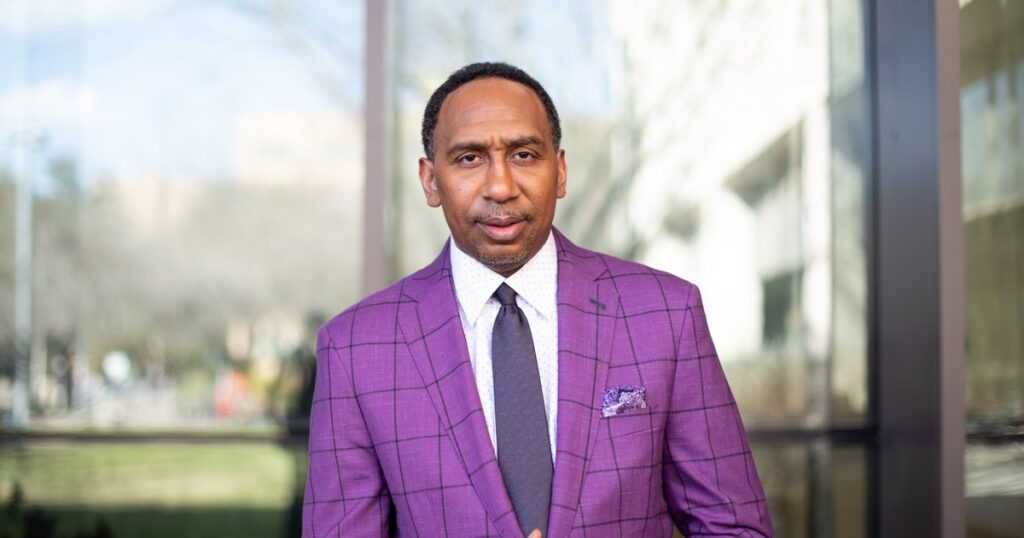
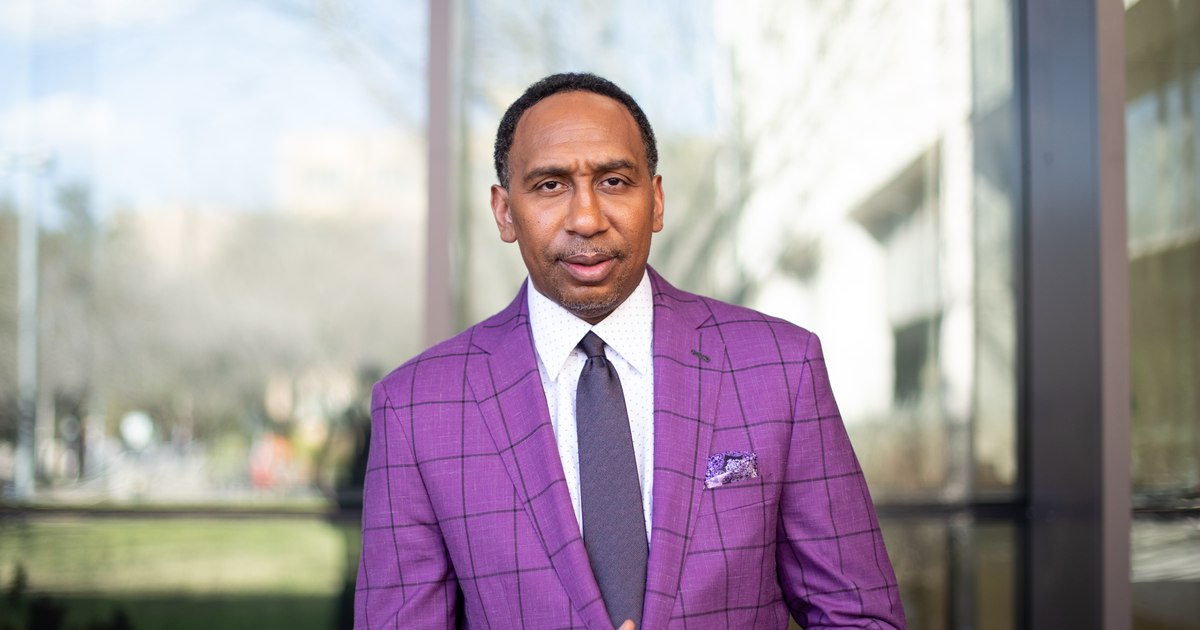
Photo: Moody College of Communication, CC BY-SA 2.0, via Wikimedia Commons.
Join Orbit — where Black professionals, entrepreneurs and leaders connect, collaborate and turn opportunities into action. https://orbit.blackbusinessreview.net/