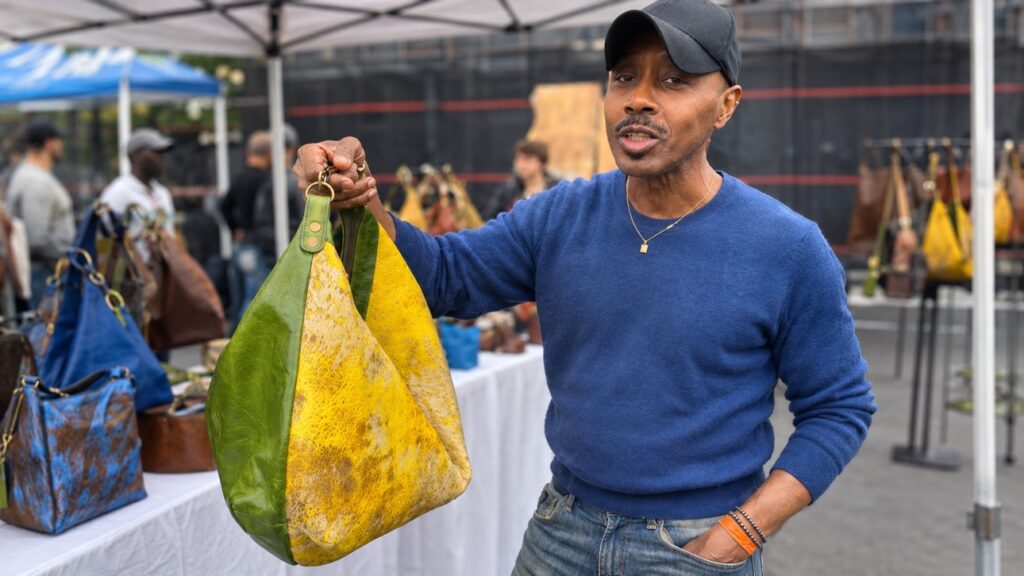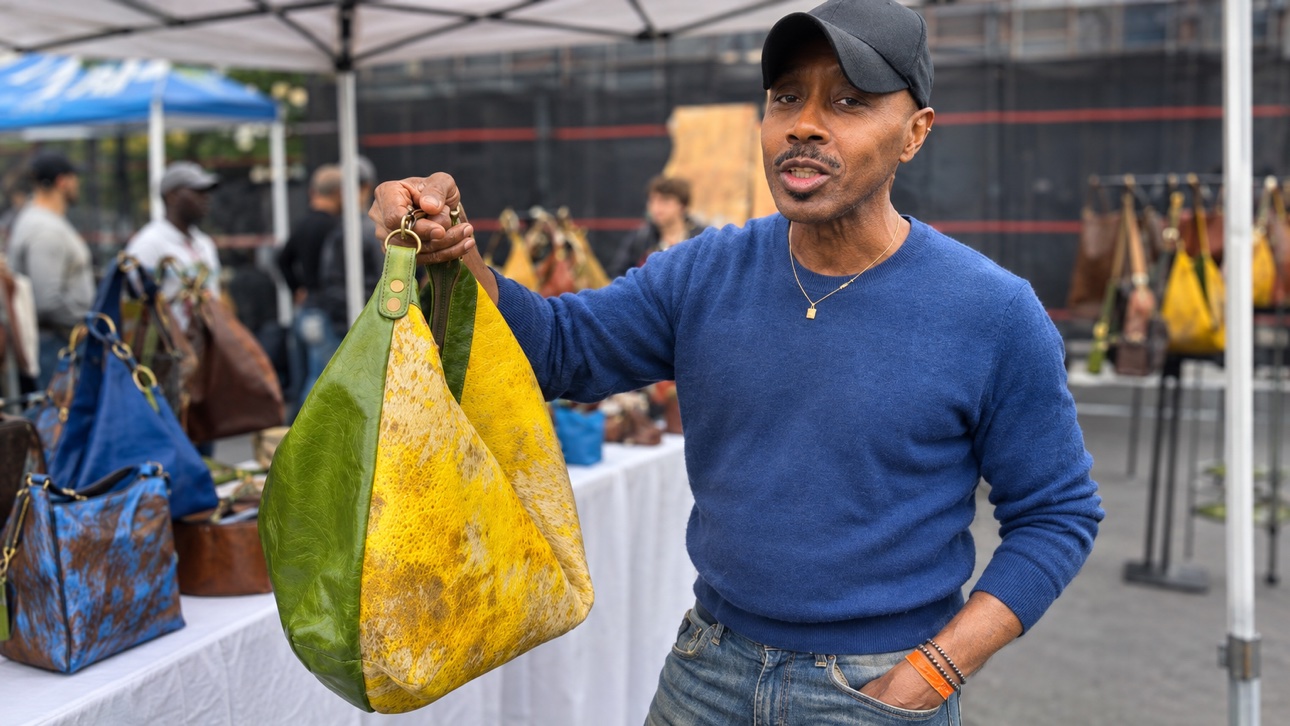
NEW YORK — On certain Sundays, there are two lines to get into the Grand Bazaar on Manhattan’s Upper West Side. One line is for the market itself. The other is for a handbag.
The bags are made by Francis Pierre Laborde, a Haitian-born designer who cuts, sews and assembles every one of them by hand in the Harlem apartment that doubles as his studio. They come in electric blue leather, pony hair, gold and polka dots — and they sell out in minutes. In August, CBS Saturday Morning carried his story to a national audience, and CBS has called his work the “Birkin of Manhattan.” Laborde’s answer to that kind of demand is the opposite of what the fashion industry teaches: he refuses to mass-produce.

From Port-au-Prince to West 77th Street
Laborde was raised in Port-au-Prince and immigrated to New York shortly after finishing high school. Fashion was not a career plan he picked up later. It was there from the start.
“In Haiti, all my clothes were tailor-made,” he told The New York Times. “Every time I had my clothes made I had to change everything — the color and style. This is when I knew I loved fashion.”
He lived with his father and sister in Brooklyn, learned English, and found work as a designer at a textile company on Sixth Avenue, near Radio City Music Hall. While holding that job, he studied fashion design at the Fashion Institute of Technology, taking one class at a time — all he could afford — and graduated in 1999. Years later he went back to FIT to audit classes on handbag construction.
Industry work never quite delivered what it promised. He designed custom wedding gowns for a time. In 2004, he began making accessories on his own, after noticing that everyone around him was carrying the same Louis Vuitton bag and deciding consumers could use some variety. For years he moonlighted: selling purses to friends, at parties a neighbor threw for him, out of a living room he turned into a showroom. Friends sometimes bought bags just to make sure he could make rent.
A friend pointed him to the Grand Bazaar in 2016. On his first day selling there, in 2018, he sold four clutches and made $1,500. That same year he was let go from a job selling skin care products and bet on the bags full-time. The early returns were brutal.
“After a few Sundays, I will be there and nothing,” he recalled. “I knew people had to get to know me.”
Made by Hand, in Color
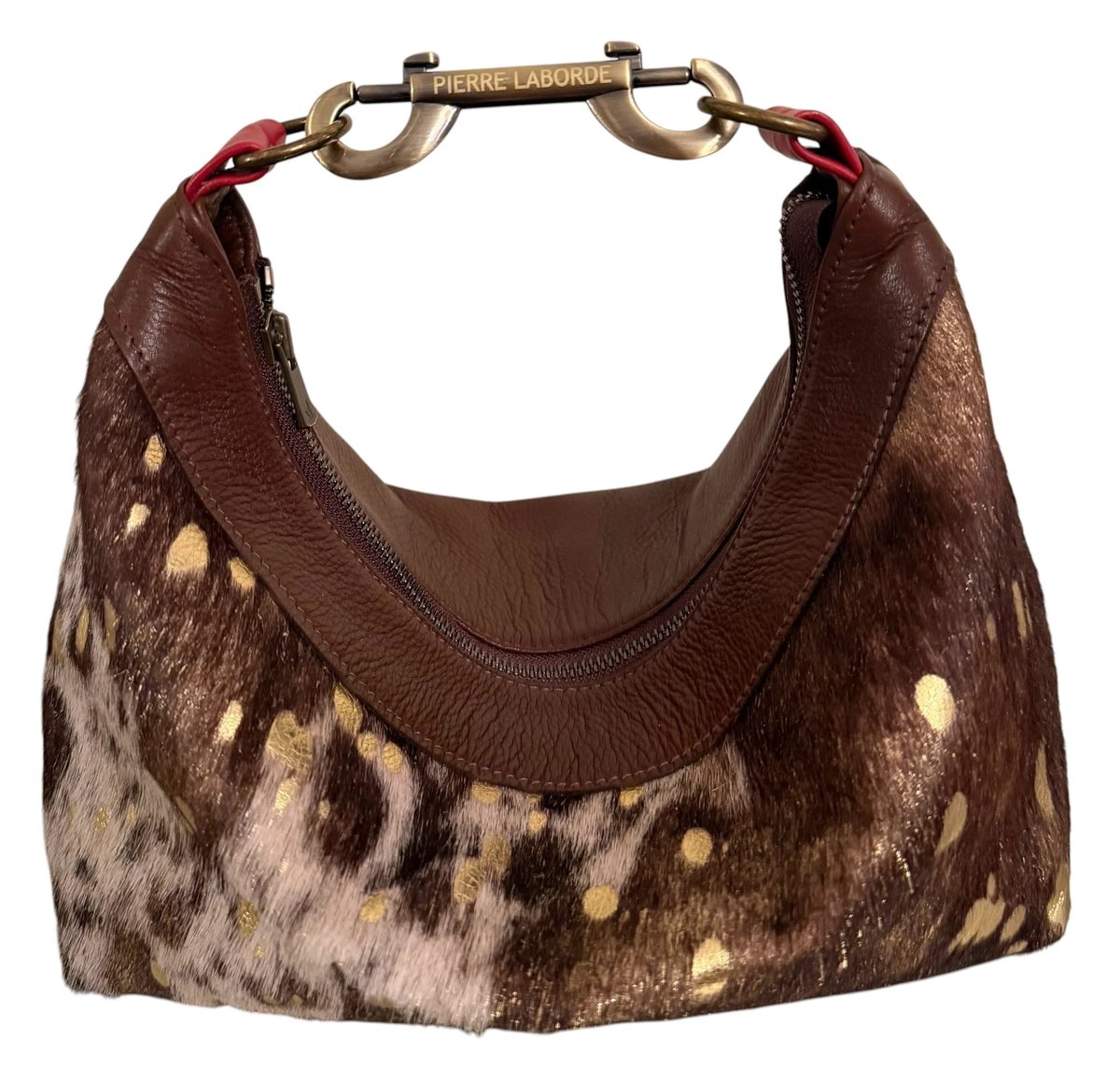
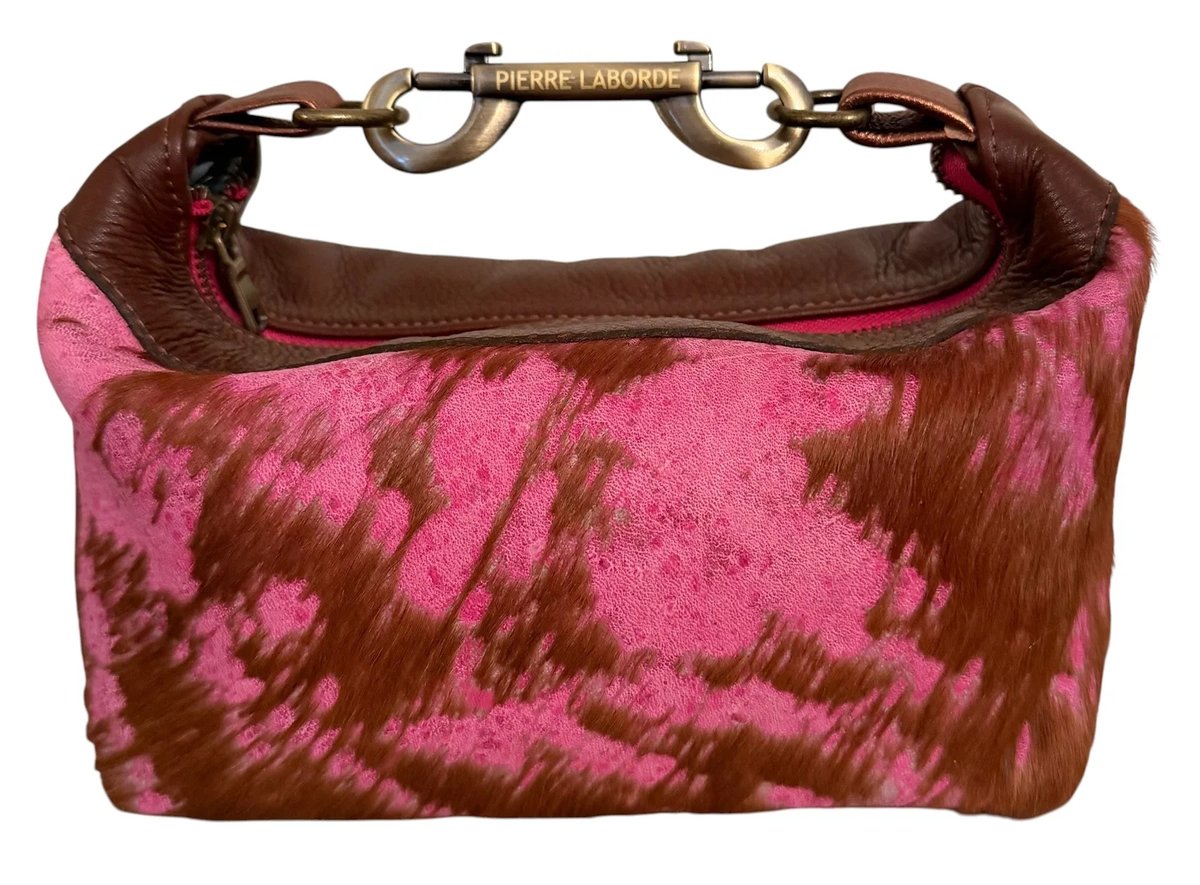
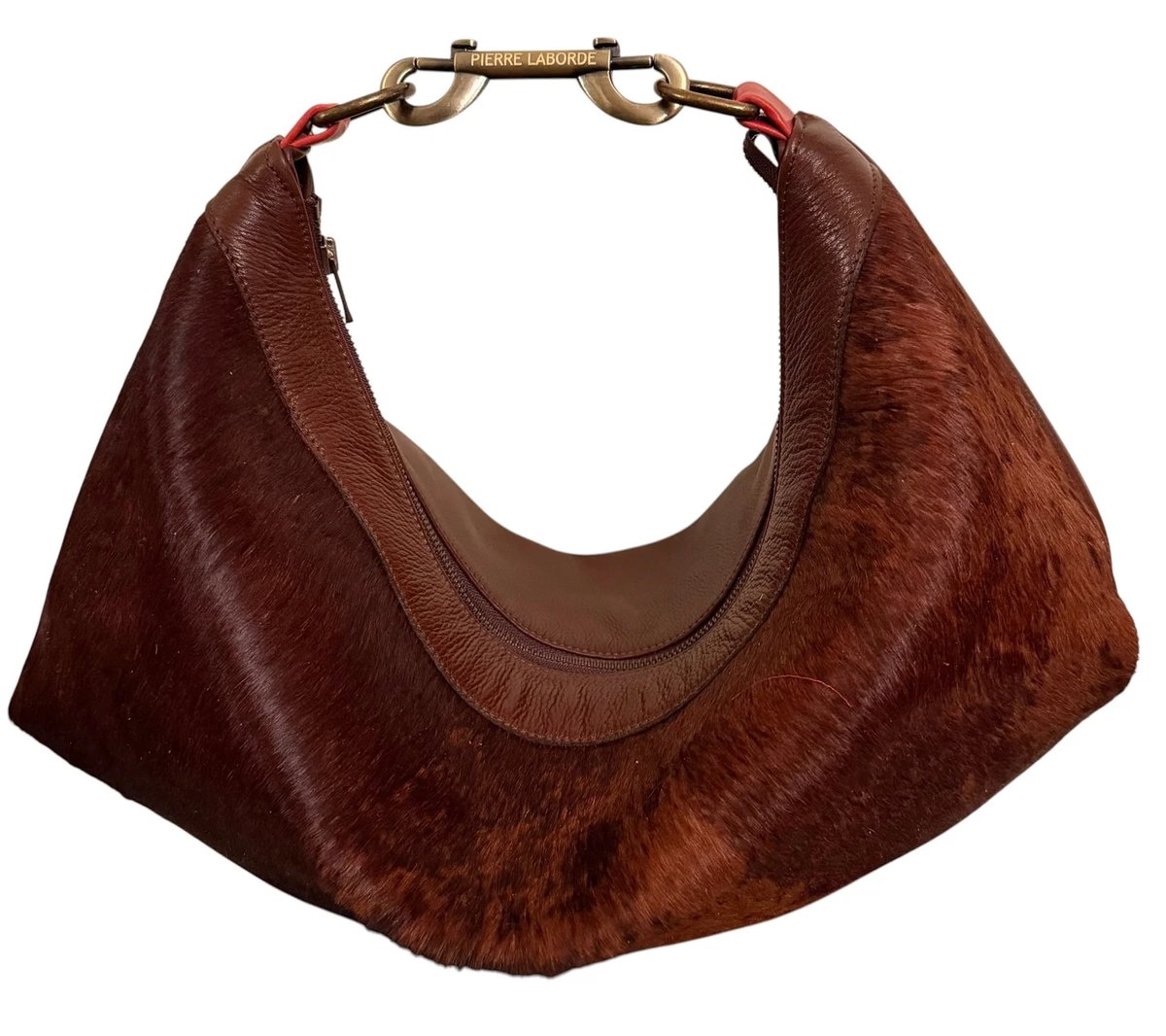
Every Pierre Laborde bag still passes through his own hands and his paint-splattered sewing machine in Harlem. The materials are leather and pony hair; the colors are the point. CBS reported that his palette draws on the bright, hand-painted tap-tap buses of Haiti. Laborde puts it more simply: “Coming from Haiti, color is everything to me. I just want people to feel empowered to wear it.”
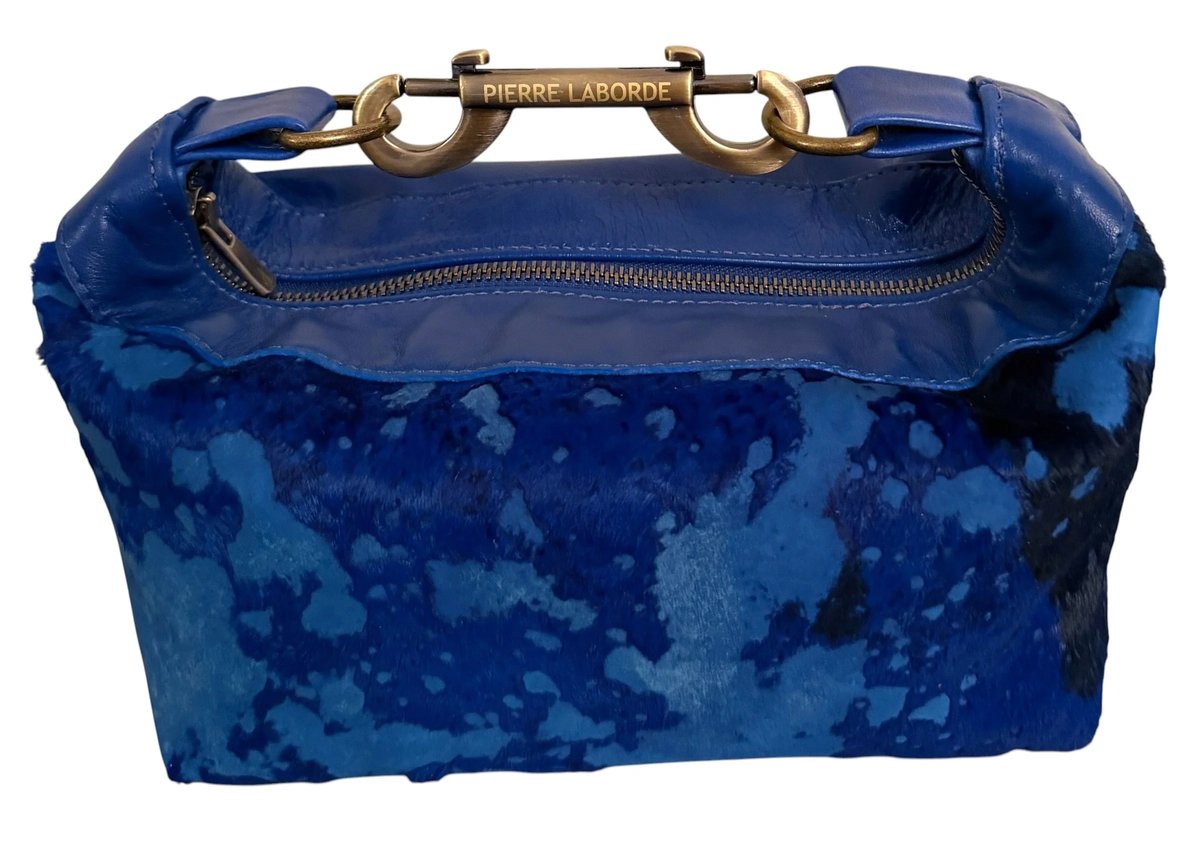
The signature is recognizable across a crowded market: compact shapes, painterly color combinations, and a metal bar handle engraved with his name. No two bags are the same. His website sells through a waiting list, and styles like his Pacha hobo and Dania cowhide bag are spoken for quickly when they appear.
Then, in late 2024, a customer posted a TikTok of herself acquiring one of his handmade leather purses. Her caption read, in part, “I need everyone to blow this man’s brand up.” The people obliged.
The Frenzy — and the Refusal
By November 2025, more than 600 people were turning up at the Grand Bazaar for a limited supply of bags. One drop sold out in 27 minutes, by his count. Shoppers swarmed his table; he built an online ticketing system to keep the buying fair and the crowds orderly. CBS cameras found customers who had driven overnight from Pittsburgh to stand in his line.
“There were times I would be here, I would go home with zero dollars,” he said of the lean years at the market. “So, this is kind of overwhelming.”
The standard playbook at this point is a licensing deal, offshore production and a price ladder. Laborde has declined to run it. His bags sell for $295 to $1,200 — serious money, but a fraction of what the Birkin he is compared to commands — and he has raised prices only slightly since the frenzy began. The scarcity is not a marketing device. It is what happens when one pair of hands insists on making the product.
“It can be very overwhelming,” he said in an interview earlier this year. “At the same time, I just want to block out the noise and keep on creating.”
What It Proves
Laborde’s rise matters beyond one market stall. He built a luxury name with no fashion-house backing, no investors and no gatekeeper’s permission — the desire was built in public, by customers, in front of everyone. He owns the name engraved on every handle.
He is part of a wider shift BBR has been documenting: Black designers building houses of their own instead of waiting for a seat inside someone else’s. Diarra Bousso’s Diarrablu pairs algorithms with artisans to produce fashion on its own terms, and footwear designer Dr. D’Wayne Edwards has spent a career turning design skill into independent institutions. Laborde’s version is smaller and more stubborn: one man, one machine, one market — and a line out the door.
“There were times when I did not know if I can keep on doing this,” he said. “I have had so many hard times, but I kept pushing.”
On Sunday mornings at West 77th Street, the line forms early. It is moving proof of what he was pushing toward.
Join Orbit — where Black professionals, entrepreneurs and leaders connect, collaborate and turn opportunities into action. https://orbit.blackbusinessreview.net/