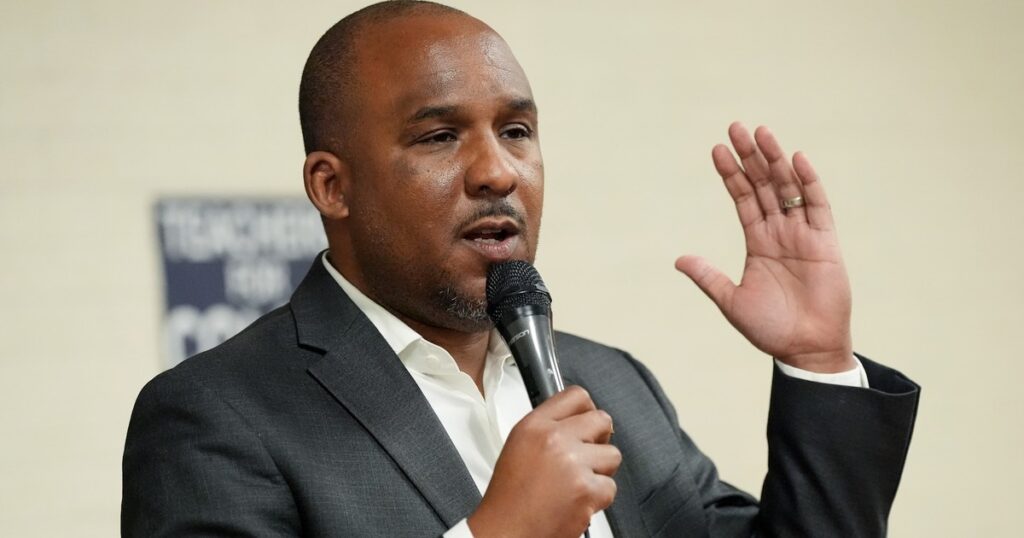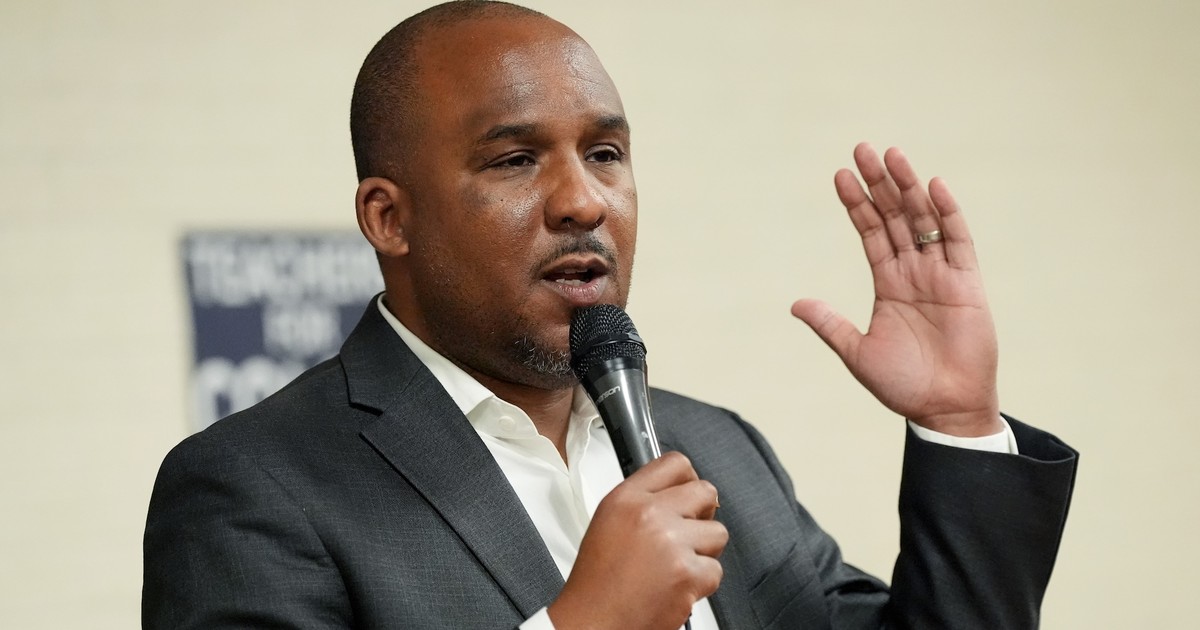
Eight days after Election Day, the Associated Press called the closest Senate race in America for a 43-year-old district attorney from Columbus. Scott Colom becomes Mississippi’s first Black senator since 1881 — and the first Black candidate the state’s voters have ever elected to statewide office. The seat belongs to the same senator who blocked his judgeship three years ago.
The last Senate race in America to be decided was the Scott Colom Mississippi Senate contest — and its answer was 145 years in the making.

On Wednesday, November 11, the Associated Press called the race for Colom, a Democrat and the district attorney for Mississippi’s 16th Circuit Court District, over Republican incumbent Cindy Hyde-Smith. CNN and NBC News followed with their own projections. It took eight days of counting absentee and affidavit ballots for the call to come, and when it came, the margin was only a few thousand votes out of more than 950,000 cast — the closest Senate race in the country. Hyde-Smith called Colom on Wednesday to concede. Mississippi has no recount process, so there is nothing left to count, only a winner to announce.
That alone would be a big story. What makes it historic is what the seat has meant since 1881.
The Longest Wait in American Politics
Mississippi’s last Black senator was Blanche K. Bruce, who left office in 1881. Before him, Hiram Revels served in 1870 and 1871. Both men were chosen by the Mississippi Legislature — as every senator was before the 17th Amendment put Senate seats in the hands of voters in 1913.
That is the honest nuance, and it matters. Colom is not simply the first Black senator from Mississippi since Reconstruction. He is the first Black candidate Mississippi’s voters have ever elected to statewide office, in the state with the highest share of Black voters in America — close to 40 percent of the electorate.
For a century and a half, that electorate watched its senators chosen by everyone else. For a century and a half, the state’s Black voters were told the numbers were against them. On Tuesday, November 3, they voted anyway. On Wednesday, November 11, the country found out what that meant.
Colom is also the first Democrat Mississippi has elected to the Senate since John Stennis in 1982 — forty-four years. The Cook Political Report had the race rated in Hyde-Smith’s favor. Donald Trump carried Mississippi by 23 points in 2024. Colom flipped at least 18 counties that voted for Trump two years ago.
A Seventh-Generation Mississippian
Colom, 43, is from Columbus, a seventh-generation Mississippian, a Millsaps College graduate who went on to law school at the University of Wisconsin. He has been the district attorney for the 16th Judicial District — Clay, Lowndes, Noxubee, and Oktibbeha counties — since 2016, winning the seat by beating a nearly 30-year incumbent. He was the first Black elected district attorney in that district’s history.
He comes from a family that has been in Mississippi’s public life for generations. His father, Wilbur Colom, a Columbus lawyer, ran as a Republican for state treasurer in 1987. His mother, Dorothy Colom, was the first Black person elected to a chancery judgeship in their district. Public service is not a new idea in that family. What is new is the office — and the way the voters delivered it.
Colom ran on the things Mississippians feel at the grocery store and the hospital: lower costs, higher wages, saving health care, saving hospitals. He called his opponent “Cindy High-Prices,” and when Hyde-Smith — a cattle rancher and former state agriculture commissioner — answered a question about soaring beef prices by saying Mississippians had “so many other proteins to choose from,” Colom’s campaign turned the gaffe into an ad. “Pick another protein?” a woman says in a diner. “She done lost her damn mind!” A man grilling hamburgers says he’d rather pick another senator instead. The ad drew 2.8 million views in its first 36 hours.
Behind the viral moment was a serious grievance Colom carried into the race. He told NPR that Mississippi “has never been a lost cause, we’ve been a betrayed cause” — that national Democrats had spent hundreds of millions of dollars elsewhere and “almost nothing in Mississippi.” The money arrived late. The voters arrived on time.
The Door She Closed
There is a second story inside this one, and it is the one that explains the fire in the campaign.
In October 2022, President Joe Biden nominated Colom to the U.S. District Court for the Northern District of Mississippi. The nomination had bipartisan support: Mississippi’s senior Republican senator, Roger Wicker, returned his blue slip — the Senate tradition that lets a home-state senator advance or block a judicial nominee. Hyde-Smith would not return hers. On April 4, 2023, she announced she was blocking him, citing his positions and alleged outside support. Colom wrote her a letter ten days later asking her to reconsider, disputing the claims one by one. It did not move her. The nomination was returned to the President in January 2024, and died.
Three years later, Colom ran for the seat of the woman who kept him off the bench — and the voters gave him the chamber that confirms the judges.
That is not a footnote. It is the spine of the story. A district attorney from Columbus was told, by a senator, that he was not fit for the federal bench. The people of Mississippi answered by sending him to the Senate instead — to the body where he will vote on the next generation of federal judges, including the ones who will sit on the court he was denied.
What This Seat Is Worth
This is a business story, not only a political one, because in Mississippi a Senate seat is an economic instrument. Federal dollars for rural hospitals. Farm policy. Disaster relief. Small-business lending. The contracts and the capital that flow through a state where the economy runs on agriculture and the hospitals are the largest employers in county after county. For a state whose Black population is nearly 40 percent of its people, representation in the room where those dollars are divided is not symbolic. It is the difference between being a line item and being a voice.
Colom’s win also widens the Democratic Senate majority to 55 seats against 44, with Alaska still uncalled — a cushion that matters for every confirmation, every budget, every bill that touches Mississippi’s economy. And it lands at a moment when the national party is being forced to re-learn a lesson Colom stated plainly: the voters were never lost. They were unasked.
After the call, former President Bill Clinton — who had campaigned for Colom in the closing days — put it this way on social media: “We may have had to count One Mississippi, Two Mississippi, but Blue Mississippi sure has a nice ring to it!”
Mississippi counted for eight days. What it counted was more than a margin of a few thousand votes. It counted a century and a half of waiting, a judgeship denied, and a campaign built on the price of beef and the cost of staying alive. The last senator Mississippi sent to Washington who looked like Scott Colom left office when the lights of Reconstruction were going out. The next one takes his seat in January — voted in by the people of Mississippi themselves, for the first time in the state’s history.
Join Orbit — where Black professionals, entrepreneurs and leaders connect, collaborate and turn opportunities into action. https://orbit.blackbusinessreview.net/
Related Posts