🎧 Listen to this story — narrated for Black Business Review (12 minutes)
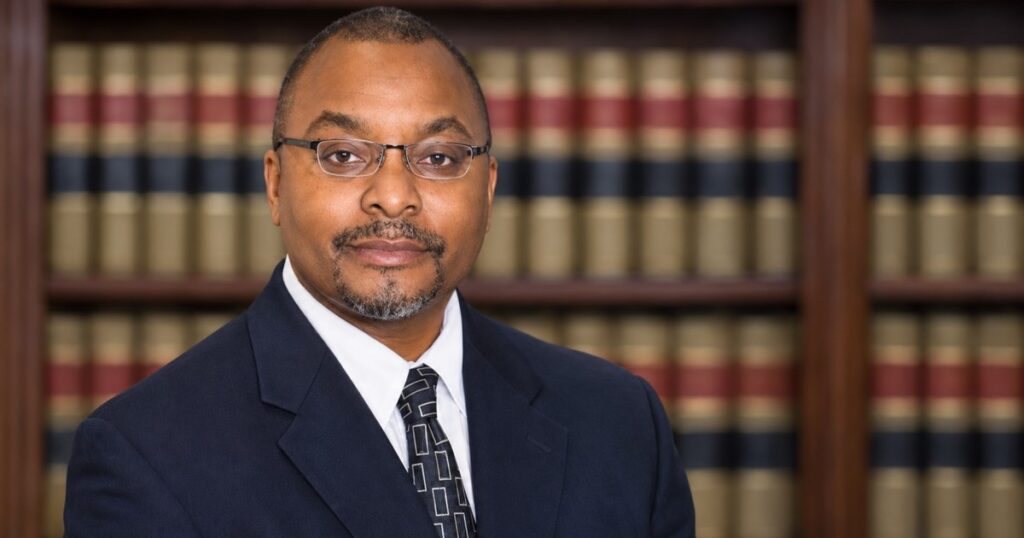
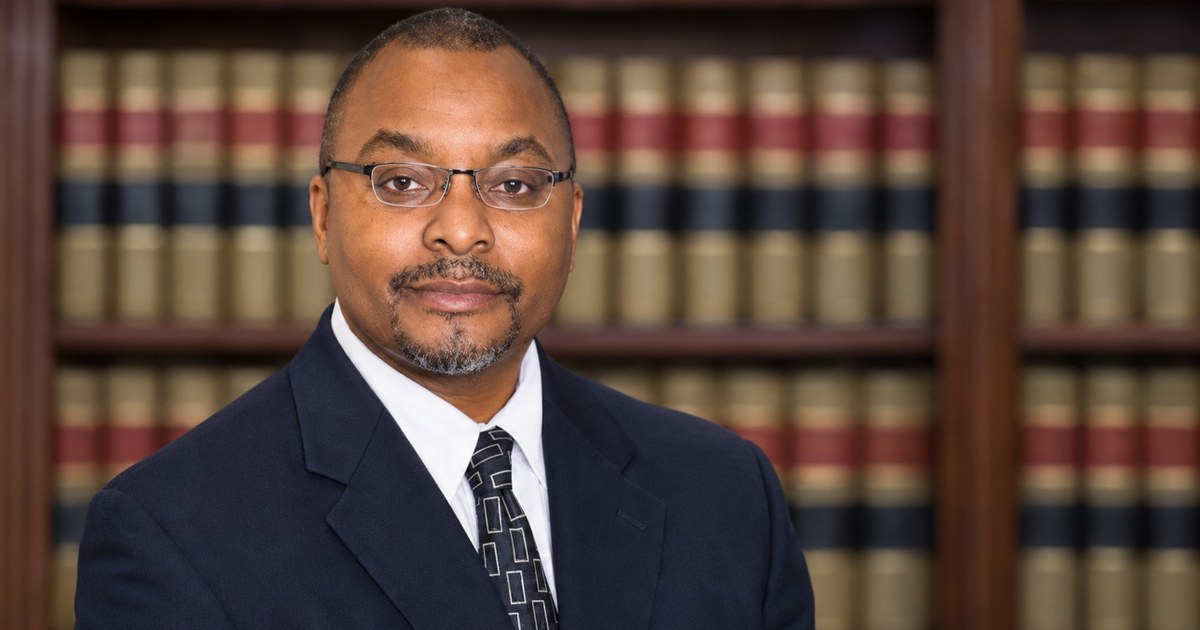
Rogers Hicks, founder and president of Paralegal & Legal Assistance Services, established in 1993, received his Bachelor’s degree in paralegal studies from the State University of Buffalo, New York. Hicks works primarily on Criminal Appeals and Post-conviction Remedies with law offices in Buffalo and New York City, where he assists in reviewing and developing post-conviction claims in coordination with licensed attorneys.
Mr. Hicks, on June 4, 1993, drafted and presented a Petition on behalf of U.S. Citizens of Afro-American descent to the United Nations World Court c/o Centre for Human Rights, Committee on the Elimination of Racial Discrimination, Geneva, Switzerland (source: Challenger News, Sept. 28, 1994, Vol. 30, No. 39: ‘UN Appointee to Hold Hearings on Racism in the United States’). His book publication, RACE JUSTICE: Judicial Atrocities Committed Against People of Color, is an adaptation of the UN Petition and an ever-evolving literary piece. The book is available through his author site and Website: http://www.racejustice-jacapoc.com
Hicks’ recent work relates to a motion filed on July 1, 2026, in the NYS Supreme Court, Erie County, asking the court to vacate Benjamin Castricone’s conviction (one of the individual cases previously addressed in the U.N. Petition) on grounds of actual innocence. Castricone, who was convicted by an all-white jury and served 12 years in prison for a robbery, now has evidence later discovered, including a fingerprint and confessions from the actual perpetrators, that establishes Castricone’s actual innocence. The motion also reflects the decades-long work of Hicks, who has worked on the case for approximately thirty-three years. Hicks is credited with the longevity and persistence behind the investigation, including efforts to locate and develop evidence from the actual perpetrators, and with helping research the factual and legal basis for the motion.

The book is the evidence file
Race Justice: Judicial Atrocities Committed Against People of Color is that argument between covers. It compiles official court records and case-history comparisons spanning, in Hicks’s account, at least fifty years — the punishments handed to Black defendants set beside those given to white defendants in comparable cases — and catalogues what Hicks describes as the techniques used to deprive minorities of their constitutional rights under the guise of judicial process.
It is an advocacy document and reads like one: Hicks is building a case, not surveying one. The book closes with his proposed remedy, a program of judicial reform. It grew, according to his organization’s case materials, out of a petition he presented in June 1993 to the United Nations Committee on the Elimination of Racial Discrimination in Geneva. The book has been in circulation for years — sold in Buffalo book circles more than a decade ago — and it is back in circulation now for a specific reason: the live case it points toward has reached a courtroom decision point.
The book is available through his author site, RaceJustice-JACAPOC.com.
The jury fight
The thread Hicks returns to most often is the jury box. In 1986, the Supreme Court decided Batson v. Kentucky, the case governing challenges to racially motivated juror strikes. Hicks reads the ruling — and the passage his petition quotes, that a citizen has no right to a jury composed in whole or in part of persons of his own race — as sanctioning the all-white juries he argues have decided Black defendants’ fates for generations. Justice Thurgood Marshall’s concurrence, warning that the decision would not end racial discrimination in jury selection, opens the petition Hicks launched on Change.org on August 19, 2013, calling for Batson’s repeal. According to Hicks, it closed with 682 supporters.
Easy to file under symbolism — except the jury question sits at the center of the case Hicks has spent half his life on.
Twelve years, three confessions, one pending motion
On August 8, 1991, a Kentucky Fried Chicken restaurant in Erie County was robbed at gunpoint. Benjamin Castricone, a 24-year-old Black father of two, was convicted of the crime. The appellate record is a matter of public fact: his first conviction was reversed, the Appellate Division finding the identification error could not be called harmless because there was no physical evidence linking him to the robbery and one of three eyewitnesses had identified a different man at the lineup. He was tried again, convicted again, and served approximately twelve years in prison.
What happened next is set out in the amended motion Hicks helped research and develop, filed July 1, 2026 under New York’s CPL 440.10, which asks the court to vacate the conviction, dismiss the charges, and expunge the record. The motion asserts Castricone’s actual innocence. It points, according to the filing, to three sworn confessions: an affidavit executed in 1994 by Johnnie Lane admitting his own role in the robbery and naming the other participants — and, later, corroborating affidavits from Eric Gordon and, in 2025, Derrick Brown, each stating, per the motion, that Castricone was not involved and was unknown to them. It points to a fingerprint recovered from the crime scene that, the motion says, did not match Castricone and was never compared against the men the affidavits name. And it notes that Castricone was tried, both times, before all-white juries, on cross-racial eyewitness identification.
Those are the motion’s assertions, and the court has not ruled on them. What is documented is narrower and still remarkable: the weaknesses in the original identification case were serious enough for an appellate court to throw out the first conviction on exactly that ground, and the attorney presenting the motion, Louis Rosado, argues in the case materials that the failure to investigate the confession and the fingerprint “cannot be dismissed as ordinary human error.” Buffalo has been here before — Valentino Dixon’s Erie County conviction was vacated in 2018 after twenty-seven years.
Hicks, by the case organization’s account, has worked on Castricone’s behalf for roughly thirty-three years — the same method as the book, applied to a single defendant: patience, paper, and the official record, assembled until someone in authority has to read it.
Why it lands now
There is a temptation to treat a book like this as history. Hicks’s argument is that it is a working document. His case comparisons are drawn from court records any reader can pull; his reform proposal speaks to jury selection and post-conviction review as they operate today; and the motion pending in Erie County will test how much weight a court gives to confessions, fingerprints, and the composition of the juries that convicted a man.
Whatever the court decides, the file stays open in public. That, for Hicks, appears to be the point of putting it between covers.
Race Justice: Judicial Atrocities Committed Against People of Color is available at RaceJustice-JACAPOC.com. The case materials in the Castricone motion are published at castricone-casedocs.com.
For more information — Press Release: https://castricone-casedocs.com/pressrelease.html · Email: [email protected] · Court Exhibits: https://castricone-casedocs.com/document_list.html · Donations (Legal Defense Fund): https://www.paypal.com/donate?campaign_id=TW6JGQT3STP2L · Video: https://www.youtube.com/watch?v=X4fj02P1PBM
Join Orbit — where Black professionals, entrepreneurs and leaders connect, collaborate and turn opportunities into action. https://orbit.blackbusinessreview.net/