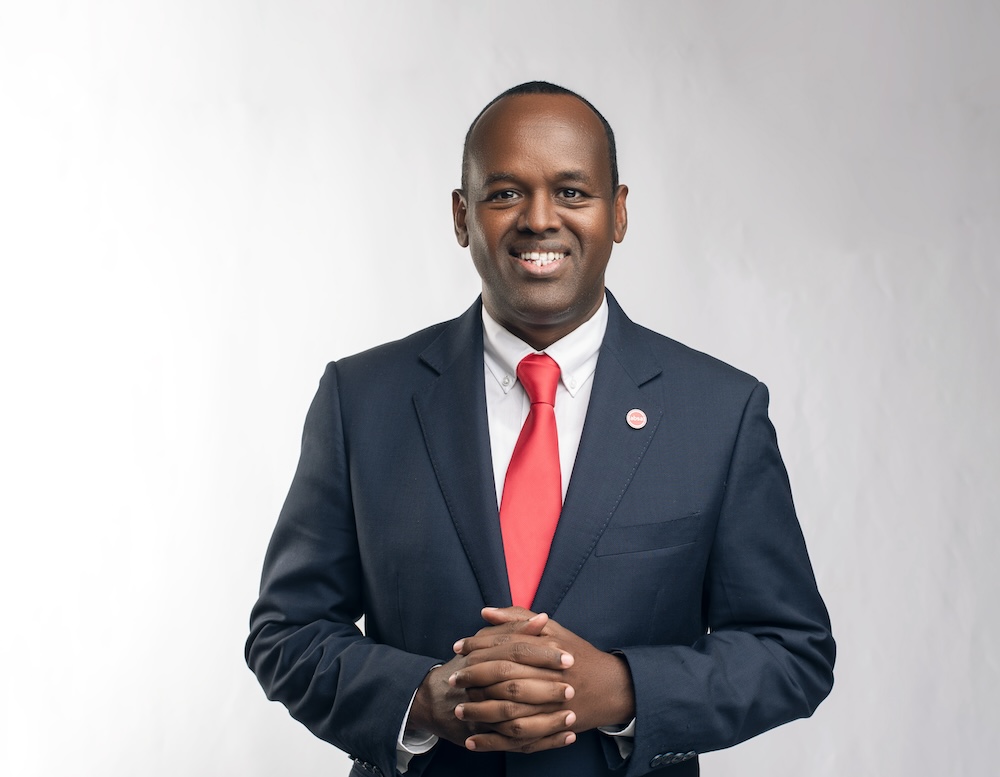
Africa50 has appointed veteran investment and development finance executive Cheick-Oumar Sylla as CEO of its Project Development Fund, placing him in charge of transforming some of Africa’s most pressing infrastructure needs into viable, investment-ready projects.
Cheick-Oumar Sylla’s vision for infrastructure development is crucial for addressing Africa’s immediate needs.
Under the leadership of Cheick-Oumar Sylla, Africa50 aims to revolutionize infrastructure investment.
Cheick-Oumar Sylla’s extensive experience will guide the fund’s strategic initiatives.
With Cheick-Oumar Sylla at the helm, the focus will be on sustainable development.
The Casablanca-based infrastructure investment platform announced Sylla’s appointment on September 1, 2026. He brings more than 30 years of leadership experience across infrastructure investment, project development, development finance and private-sector expansion in Africa, Europe and the Middle East.
The initiatives led by Cheick-Oumar Sylla will address critical gaps in infrastructure.
Sylla joins Africa50 from the International Finance Corporation, a member of the World Bank Group, where he served as regional director for North Africa and the Horn of Africa. In that position, he led investment and advisory operations across markets with vastly different political, financial and development conditions.
His new assignment carries an enormous mandate: help create the pipeline of credible, commercially structured projects that governments need and institutional investors are willing to finance.
Cheick-Oumar Sylla’s leadership is pivotal for fostering public-private partnerships.
Through Cheick-Oumar Sylla’s efforts, investment opportunities will be maximized.
Cheick-Oumar Sylla is set to lead transformative projects that align with market demands.
Turning Infrastructure Needs Into Investable Assets
Cheick-Oumar Sylla’s Role in Transforming Infrastructure
Africa does not lack infrastructure needs. Across the continent, countries require expanded power generation, stronger transmission networks, modern transportation systems, improved logistics and significantly greater digital connectivity.
The harder challenge is moving a project from an urgent public need to an opportunity capable of attracting serious capital.
That transition requires feasibility studies, financial modeling, regulatory coordination, environmental assessments, risk allocation, government negotiations and a commercially workable investment structure. Without that development work, potentially transformative projects can remain stalled for years.
Sylla will lead the Africa50 fund responsible for helping projects cross that divide.
“Project development is the engine of Africa50’s model,” Sylla said in announcing his appointment. “It is how we turn infrastructure needs into bankable opportunities.”
That statement captures the strategic importance of his position. Sylla is not simply being asked to manage an existing portfolio. His job is to help manufacture the next generation of investable African infrastructure assets.
With Cheick-Oumar Sylla’s guidance, the platform aims to enhance investment flows.

Three Decades of Investment and Development Experience
Cheick-Oumar Sylla’s strategic direction will attract new capital for infrastructure development.
Sylla’s background gives him experience on both sides of the infrastructure equation.
Cheick-Oumar Sylla’s focus on measurable outcomes will drive project success.
During his IFC career, he served as principal investment officer for Africa infrastructure and natural resources and as country manager for the Horn of Africa. That earlier position covered Ethiopia, Eritrea, Djibouti, Sudan and South Sudan—markets where successful investment often requires navigating significant political, financial and operational complexity.
Before joining IFC in 2017, Sylla held senior leadership positions at ContourGlobal, the Islamic Corporation for the Development of the Private Sector and several African businesses. His career has included work across energy, telecommunications, banking, pharmaceuticals and hospitality.
The breadth matters. Major infrastructure projects rarely succeed through financial engineering alone. They require executives who understand government priorities, private investors’ return expectations, construction and operating risks, and the economic realities of the communities the projects are intended to serve.
Sylla must now apply that experience to Africa50’s expanding development platform and its 2030 roadmap.
Africa50’s Growing Infrastructure Platform
The impact of Cheick-Oumar Sylla’s work will resonate throughout the continent.
Africa50 develops, finances and delivers infrastructure projects while working with African governments and private capital providers. The organization currently has 38 shareholders, including 33 African countries, the African Development Bank and several major African financial institutions.
Africa50 reports that it has invested in 32 projects across 30 countries during approximately eight years of operation. Those projects represent more than $8 billion in aggregate value and span sectors including energy, transportation and digital infrastructure.
The platform is also attracting new institutional capital. In August 2026, Africa50 announced $50 million in commitments from international finance institutions for early-stage investment in climate-resilient projects—a direct indication of the capital-mobilization opportunity Sylla inherits.
His performance will ultimately be measured by more than the number of projects evaluated. The real test will be how many projects reach financial close, attract outside capital, move into construction and begin delivering measurable economic value.
BBR Assessment: The Executive Turning Africa’s Infrastructure Gap Into Investable Deals
Cheick-Oumar Sylla’s appointment is a major leadership move because he will operate where public need, government policy and global capital converge.
Africa’s infrastructure gap is frequently discussed as a development problem. It must also be understood as an investment opportunity—provided projects can be properly developed, structured and de-risked.
Sylla now controls part of the machinery designed to make that happen.
A successful Project Development Fund can create a multiplier effect. Early development capital can unlock considerably larger pools of construction financing, equity investment and long-term institutional capital. Completed energy, transportation and digital projects can then support business expansion, regional trade, employment and economic productivity.
That is why this appointment deserves attention well beyond the development finance community. Sylla is assuming responsibility for building the assets upon which other businesses—and, in some cases, entire markets—will depend.
BBR Power Move Score: 99/100
Related Posts