From Anthony Overton’s banking empire to Michael Jordan’s global brand, Chicago’s richest Black family and other Black business families transformed entrepreneurship into power, influence and generational wealth.
The Legacy of Chicago’s Richest Black Family in Contemporary Business
Chicago’s skyline tells two stories. One is written in steel, glass and architectural ambition. The other lives in Bronzeville and across the South Side, where Black entrepreneurs built banks, insurance companies, publishing houses, beauty empires and real estate portfolios while much of corporate America refused to recognize their economic power.
Understanding the wealth generated by Chicago’s richest Black family highlights the significant contributions made by Black entrepreneurs throughout history.
In this context, Chicago’s richest Black family not only symbolizes individual success but also represents the potential of community-driven economic empowerment.
As discussed, recognizing the achievements of Chicago’s richest Black family can inspire future generations to pursue entrepreneurship.
Hence, the legacy of Chicago’s richest Black family continues to influence aspiring business leaders today.
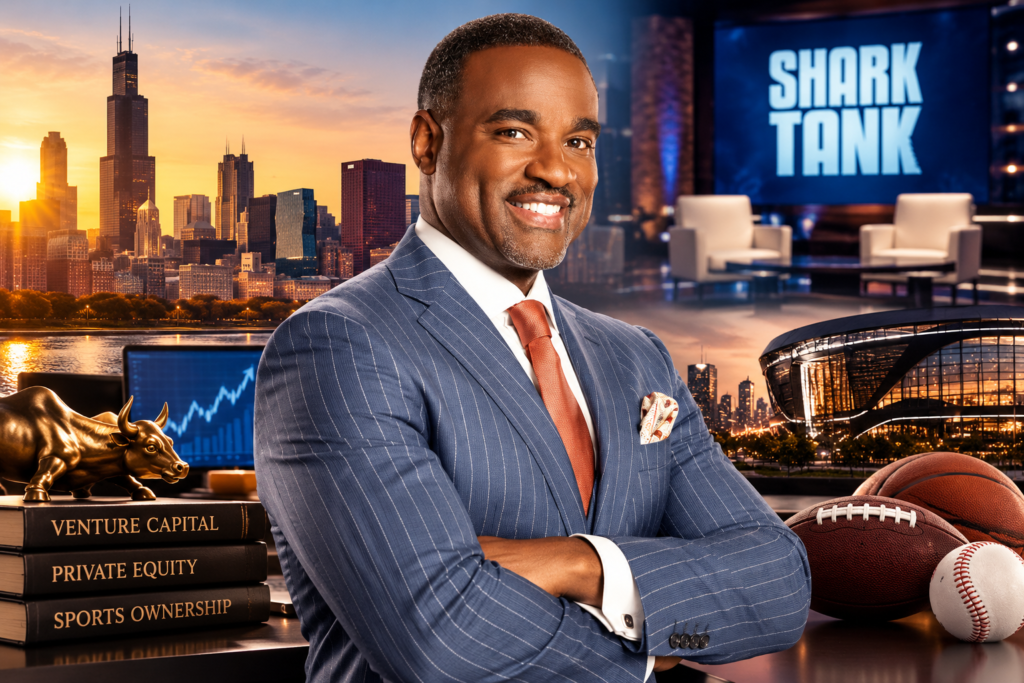
Determining Chicago’s single richest Black family is difficult. Most family holdings are private, historical valuations are incomplete and personal net worth is not the same as multigenerational family wealth. Based on publicly reported estimates, however, Michael Jordan represents the strongest modern candidate connected to Chicago. His fortune was estimated at approximately $3.8 billion in late 2025, largely created through licensing, endorsements and equity rather than basketball salary alone.
In particular, the story of Chicago’s richest Black family reflects broader themes of resilience and innovation in the face of challenges.
Yet the full story of Black wealth in Chicago is larger than one billionaire. It is the story of families that understood a timeless principle: income may support a lifestyle, but ownership builds a legacy.
Understanding the legacy of Chicago’s richest Black family is essential to appreciating the broader narrative of wealth creation in the community.
Michael Jordan Turned Athletic Greatness Into Intellectual Property
This perspective sheds light on how Chicago’s richest Black family leveraged their resources for community benefit.
Each achievement of Chicago’s richest Black family contributes to collective identity and pride within the community.
Michael Jordan earned approximately $90 million during his NBA career, but his greatest financial victory happened away from the basketball court. His relationship with Nike transformed his name, image and cultural influence into one of the most valuable licensing platforms in sports.
Jordan Brand became more than an endorsement deal. It developed into a global business selling footwear, apparel and status to generations of consumers. Jordan reportedly earned hundreds of millions of dollars annually from his Nike relationship, demonstrating the extraordinary value of retaining a financial interest in a brand rather than accepting only an upfront payment.
Jordan also purchased a majority interest in the Charlotte Hornets for approximately $275 million in 2010. He sold his controlling stake in 2023 as part of a transaction valuing the franchise at about $3 billion while retaining a minority interest. His portfolio has also included investments in sports-focused venture capital and ownership in 23XI Racing. Reuters reported on Jordan’s expansion into sports-related venture investing.
The Jordan model rests on four pillars: intellectual property, licensing income, equity ownership and diversification. That structure makes his fortune less dependent on any single paycheck—and more capable of benefiting future generations.
Thus, the impact of Chicago’s richest Black family extends beyond financial gain, fostering social change and empowerment.
Ultimately, the achievements of Chicago’s richest Black family are a testament to the power of entrepreneurship in driving progress.
Moreover, the narrative surrounding Chicago’s richest Black family encourages a deeper understanding of economic history.
In conclusion, Chicago’s richest Black family illustrates the importance of legacy in shaping future opportunities.
Oprah Winfrey Built a Media Ownership Machine
Oprah Winfrey’s Chicago story began with television, but her wealth was created through ownership.
Instead of remaining merely an employee or highly paid host, Winfrey established Harpo Productions and gained control over the production and syndication of The Oprah Winfrey Show. That decision allowed her to participate in the show’s long-term economic value rather than simply collecting a salary.
Winfrey later expanded into film, publishing, cable television, real estate and strategic investments. Her estimated multibillion-dollar fortune illustrates one of the most important lessons in media: the person appearing on the screen can become wealthy, but the person who owns the content, distribution rights and production company can build an empire.
Although Winfrey is generally measured as an individual rather than the head of a Chicago family dynasty, the business infrastructure she created offers a powerful blueprint for transferring intellectual property, investment assets and philanthropic influence across generations.

The Johnson Family Changed How Black America Saw Itself
Therefore, understanding Chicago’s richest Black family is crucial for comprehending the evolution of wealth within the community.
John H. Johnson built one of the most influential Black-owned media companies in American history. Founded in Chicago in 1942 with a $500 loan secured against his mother’s furniture, Johnson Publishing Company launched Ebony in 1945 and Jet in 1951.
The company did more than publish magazines. It controlled advertising relationships, photography, editorial archives, cosmetics brands and highly valuable commercial real estate. The Johnson Publishing headquarters became the first—and only—downtown Chicago building constructed for an African American owner, according to the City of Chicago’s landmark report.
Johnson became the first Black American included in the Forbes 400. His company later experienced declining circulation, asset sales and bankruptcy, offering a difficult but essential lesson: building wealth and preserving wealth require different strategies.
Succession planning, technological adaptation and protection of core assets are just as important as the original entrepreneurial breakthrough.
The Gardners Converted Beauty Innovation Into Equity
Edward and Bettiann Gardner founded Soft Sheen Products on Chicago’s South Side, initially operating from their home. The company grew into one of America’s leading Black hair-care manufacturers, employing hundreds and generating tens of millions of dollars in annual sales.
As such, the story of Chicago’s richest Black family is not just about wealth; it’s about cultural heritage and community pride.
Soft Sheen combined product development, manufacturing, distribution and culturally informed marketing. That vertical control made the company attractive to global cosmetics leader L’Oréal, which acquired it in 1998.
The Gardners also invested beyond beauty. They acquired an ownership interest in the Chicago Bulls during the 1980s, and Bettiann Gardner became the team’s first female co-owner. They also purchased and restored the historic Avalon Theater, reopening it as the New Regal Theater. ABC7 Chicago documented the family’s influence across business, sports and culture.
Their strategy was classic wealth diversification: build an operating company, monetize its value and redeploy capital into real estate, entertainment, civic institutions and other appreciating assets.
Anthony Overton Built an Economic Ecosystem
Decades before modern conversations about economic ecosystems, Anthony Overton was already building one.
His enterprises included the Overton Hygienic Company, Victory Life Insurance Company, The Chicago Bee newspaper and Douglass National Bank. The Overton Hygienic Building also provided offices for Black physicians, lawyers and other professionals who were frequently excluded from white-controlled commercial districts.
By 1929, Douglass National Bank reportedly served approximately 64,000 depositors across 30 states. The bank eventually closed during the Great Depression, but Overton’s larger model remains relevant: control manufacturing, finance, media and real estate, then use those institutions to circulate capital through the community. The National Park Service preserves this history as part of Chicago’s Black Metropolis story.
The Real Meaning of Chicago’s Richest Black Family
Understanding Chicago’s Richest Black Family Dynamics
If “richest” means the largest publicly estimated personal fortune, Michael Jordan appears to lead Chicago’s modern Black wealth story. If it means institutional influence, commercial infrastructure and multigenerational impact, the answer becomes more complicated.
The Overtons built financial institutions. The Johnsons controlled representation. The Gardners manufactured culturally specific products at scale. Oprah Winfrey mastered media ownership. Michael Jordan converted identity and performance into global intellectual property.
Their collective lesson is clear: Chicago’s greatest Black fortunes were not built through income alone. They were built by owning the company, the building, the brand, the distribution system and—most importantly—the future.
Editor’s note: Net-worth figures and private-company valuations are estimates based on publicly available information. Actual family assets, liabilities and ownership structures may differ.
Related Posts