The landmark transaction would establish a new record for a professional sports franchise and deliver a 25% valuation increase in less than a year.
LOS ANGELES, August 13, 2026 — Black Business Review — The Los Angeles Lakers are changing hands again as the franchise is set to be akers Sold in a record deal. This marks yet another chapter in the storied legacy of the Lakers, now positioned to be akers Sold for an astounding $12.5 billion.
An investment group led by Thrive Capital founder Joshua Kushner and former Walt Disney Company CEO Bob Iger has reached an agreement to acquire control of the legendary NBA franchise in a transaction reportedly valuing the team at $12.5 billion. If approved, the deal would become the largest professional sports franchise transaction in history.
This new deal highlights the growing trend of franchises like the Lakers being akers Sold at unprecedented valuations.
The agreement arrives less than a year after billionaire investor Mark Walter acquired controlling ownership of the Lakers at an estimated $10 billion valuation. The rapid resale represents a remarkable $2.5 billion—or 25%—increase in the team’s valuation over a relatively short period.
With this transaction, the Lakers are truly becoming akers Sold in a way that reflects their immense market value and cultural impact.
The Lakers’ history and success have made them a prime candidate to be akers Sold, appealing to investors globally.
The proposed transaction remains subject to approval by the NBA Board of Governors, which is expected to evaluate the buyers, financing structure and ownership arrangements. The approval process could take several weeks.

The prospect of the Lakers being akers Sold showcases the franchise’s enduring brand strength and marketability.
“As lifelong NBA fans, we are deeply honored for the opportunity to become stewards of the Los Angeles Lakers, one of the most iconic sports franchises in the world,” Kushner and Iger said in a joint statement reported by ESPN. “Our long-term commitment is to build on that foundation, compete at the highest level, and serve this extraordinary team, its fans, and the city of Los Angeles.”
The acquisition does not reportedly include the WNBA’s Los Angeles Sparks or Major League Baseball’s Los Angeles Dodgers.
A Record-Setting Sports Investment
At $12.5 billion, the proposed Lakers transaction would surpass every previously reported professional sports franchise sale in North America.
The Lakers were valued at approximately $10 billion when Walter’s purchase was approved by the NBA in October 2025. That deal had already surpassed the $6.1 billion sale of the Boston Celtics and the $6.05 billion purchase of the Washington Commanders.
The latest valuation demonstrates how rapidly elite sports franchises are being transformed into institutional-grade investment assets.
For Kushner, the transaction represents a natural extension of his work in private markets. He founded Thrive Capital, the venture-capital firm known for investing in high-growth technology companies. Iger brings decades of experience in global entertainment, media distribution, intellectual property, streaming and brand development.
Investors see the potential for significant returns, making the Lakers an attractive target to be akers Sold.
Many factors contribute to why the Lakers are favored to be akers Sold, including their strong fan base and historical success.
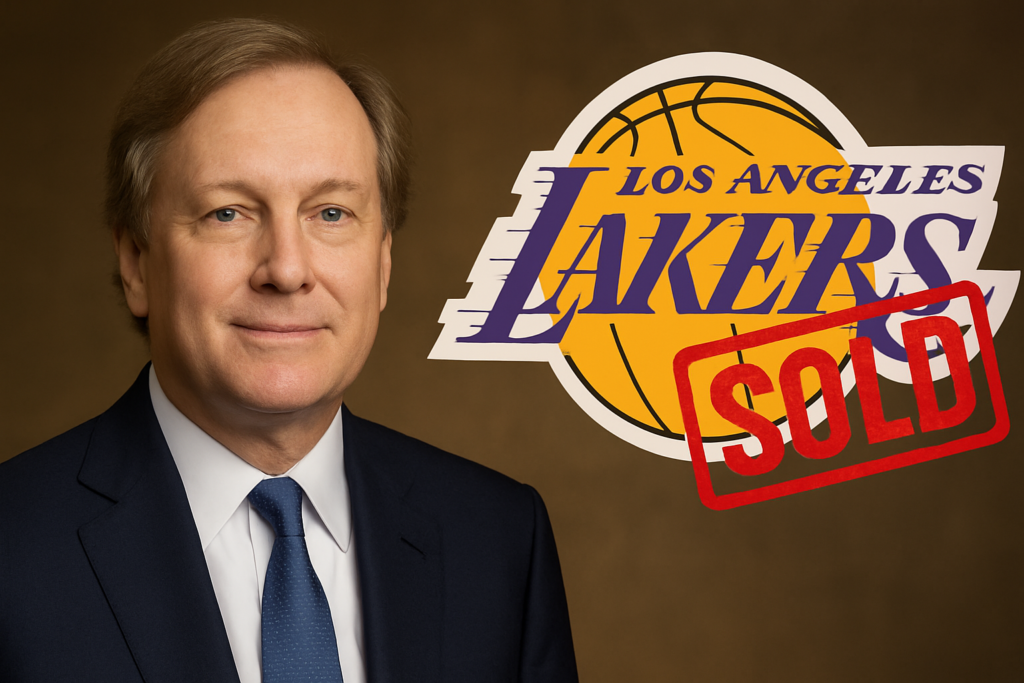
Together, they offer a combination of capital formation and entertainment expertise that could help reposition the Lakers as more than a basketball organization.
For those looking to invest, the potential for the Lakers to be akers Sold represents a unique opportunity.
The scarcity of elite franchises like the Lakers makes them even more valuable, especially as they are poised to be akers Sold.
The franchise could potentially expand revenue through digital media, international partnerships, merchandise, licensing, premium sponsorships, direct-to-consumer programming and new fan experiences.
Why the Lakers Command Such a Premium
The Lakers possess something investors cannot easily create: a globally recognized brand backed by decades of championships, celebrity culture and generational fan loyalty.
The organization has won 17 NBA championships and has been home to some of basketball’s most important players, including George Mikan, Jerry West, Wilt Chamberlain, Kareem Abdul-Jabbar, Magic Johnson, Shaquille O’Neal, Kobe Bryant and LeBron James.
That history creates a powerful competitive moat.
Another ownership group can purchase players, build an arena or launch a new franchise. It cannot manufacture the Lakers’ history, cultural influence or worldwide following.
The landscape of sports ownership is changing, and the idea of the Lakers being akers Sold reflects this shift.
From an investment perspective, the scarcity is also significant. The NBA has only 30 franchises, and controlling interests in marquee teams rarely become available. As billionaire and institutional demand for sports ownership rises, that limited supply can continue pushing valuations upward.
As private equity plays a bigger role, seeing teams like the Lakers akers Sold will become more common.
The Lakers’ unique position in the sports market makes them a prime candidate to be akers Sold, aligning with recent trends.
A Venture-Capital View of the Deal
Under traditional venture-capital standards, the Lakers offer exceptional brand recognition, market position, customer loyalty and expansion potential. However, the record purchase price creates a demanding financial hurdle.
The transition towards more corporate ownership in sports highlights why the Lakers are likely to be akers Sold, reflecting broader trends in the industry.
A valuation increase from $10 billion to $12.5 billion represents a 25% gain. But the new buyers must now generate meaningful growth from an already historic valuation.
For the franchise to reach a $20 billion value, it would need to appreciate another 60%. To double the buyers’ entry valuation, the Lakers would eventually need to be worth $25 billion.
That may sound aggressive, but the continuing growth of NBA media rights, international basketball audiences, legalized sports betting, streaming distribution and franchise scarcity provides a credible long-term investment thesis.
Still, this is not a typical venture-capital deal in which investors expect a young company to produce a tenfold return. It more closely resembles the acquisition of a rare blue-chip asset expected to generate long-term appreciation, cultural influence and portfolio stability.
The major risks include the record valuation, potentially limited cash yields, player-performance volatility, luxury-tax expenses, changing media-consumption habits and the possibility that substantial acquisition debt could restrict operational flexibility.
The End of the Family-Owned Sports Era
The transaction also reflects a broader transformation in American professional sports.
Historically, franchises were frequently controlled by individual owners or families for several generations. Today, ownership structures increasingly include private-equity executives, technology investors, sovereign funds and large investment partnerships.
The Lakers were purchased by Dr. Jerry Buss in 1979 as part of a $67.5 million package that included the team, the Los Angeles Kings, the Forum and real estate. The Lakers portion of that transaction was reportedly valued at approximately $16 million.
Nearly five decades later, the franchise is being valued at $12.5 billion.
That extraordinary increase shows how championship history, media rights, cultural relevance and asset scarcity can compound over time.
The BBR Word
The Lakers deal proves that the most valuable businesses do more than generate revenue—they own culture, command loyalty and create scarcity. At $12.5 billion, the buyers are not simply purchasing a basketball team. They are acquiring a global institution. The real challenge now is turning that legacy into the next generation of media, technology and international growth.
“You can buy a franchise, but you cannot manufacture history. The Lakers’ history is the asset—and the future is the opportunity.” — Black Business Review
Related Posts