BBR Power Move Score: 100/100
The African-founded company is transforming itself from a vehicle-financing startup into a global infrastructure provider for autonomous transportation.
By Black Business Review
August 13, 2026
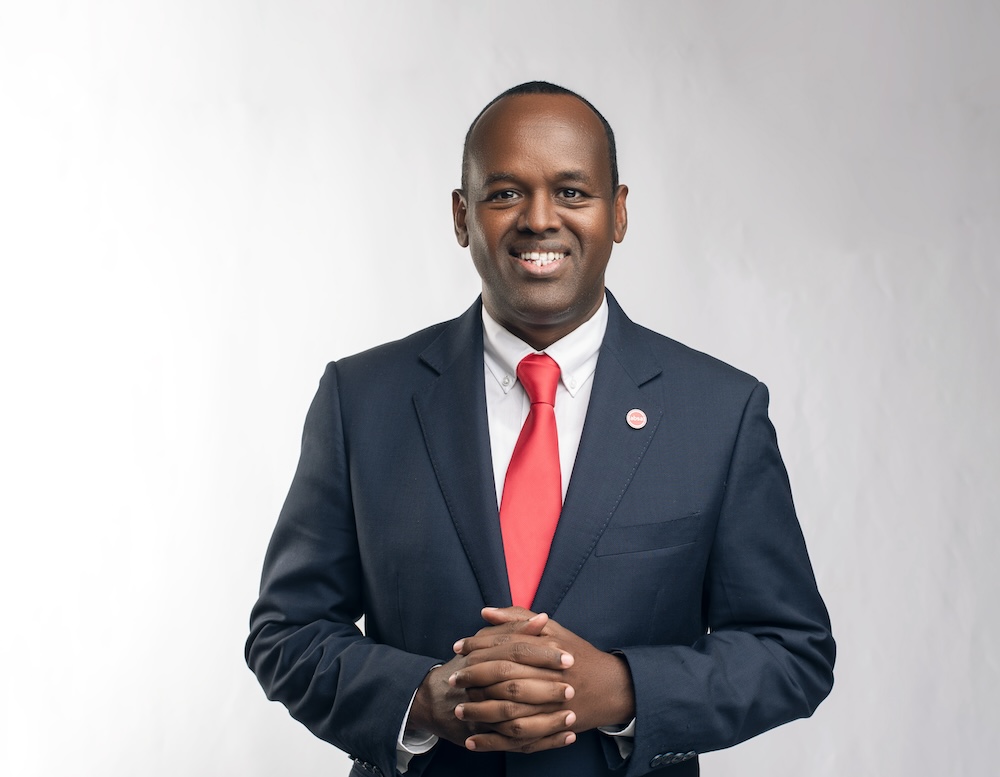
Ladi Delano and Jide Odunsi have taken Moove from an initial fleet of 76 vehicles in Lagos, Nigeria, to a global mobility company valued at $2.1 billion.
Ladi Delano and Jide Odunsi have taken Moove from an initial fleet of 76 vehicles in Lagos, Nigeria, to a global mobility company valued at $2.1 billion.
Moove announced that it raised $250 million in Series C financing led by Mubadala Investment Company and co-led by Woven Capital, Toyota’s growth fund, and Ion Pacific. BlueCrest Capital Management and Sona Capital also participated in the round.
The financing represents more than another startup fundraising milestone. It positions Moove to become a central infrastructure provider in the emerging autonomous-vehicle economy.
Founded by Delano and Odunsi in 2020, Moove now operates approximately 42,000 vehicles across 29 cities in 13 countries. The company employs more than 3,300 people and reports $420 million in annual recurring revenue, according to its official announcement. Mubadala confirmed the transaction and operating figures.
The new investment will support Moove’s international expansion, autonomous fleet ownership and development of robotics-first depots known as “Nests.” These facilities are designed to charge, clean, service, maintain and coordinate autonomous vehicles around the clock.
Moove expects to expand its autonomous-vehicle workforce from approximately 150 employees to roughly 500 by the end of 2026.

From a Lagos Financing Problem to a Global Platform
Ladi Delano: Pioneering Change in Mobility
Moove’s original business was built around a straightforward problem: Millions of African mobility entrepreneurs had the ability to generate income through ride-hailing and delivery platforms but could not obtain traditional vehicle financing.
Banks frequently rejected drivers because they lacked conventional credit histories, collateral or salaried employment records. Moove developed a revenue-based financing model that used productivity and earnings data to help qualified drivers obtain vehicles and work toward ownership.
That model allowed the company to connect financing directly to a vehicle’s income-producing potential.
What began as a financial inclusion strategy in Lagos became a scalable mobility platform. Moove expanded across Africa before entering markets in Europe, the Middle East, Asia and the Americas. Its growth also included the acquisitions of Kovi in Brazil and Tokyo Taxi in Japan.
The company is now Uber’s largest global fleet partner, according to Moove, while continuing to provide vehicles and infrastructure for human-driven transportation.
The next chapter, however, is centered on autonomous mobility.
Building What Autonomous Vehicles Need
Much of the public conversation around autonomous transportation focuses on artificial intelligence, sensors and the vehicles themselves. Moove is betting that the less glamorous infrastructure surrounding those vehicles may prove equally valuable.
Self-driving vehicles still require financing, charging, cleaning, maintenance, repairs, fleet coordination and secure facilities. Those operations must function continuously across multiple cities if autonomous ride-hailing is going to move beyond limited demonstrations.
Moove intends to provide that operating layer.
“Every major technology revolution becomes an infrastructure race,” Delano said in the company’s announcement. “The internet required data centres. AI required compute. Autonomy requires fleets, charging, maintenance, data systems and 24/7 operations in every city.”
The strategy has already secured a major commercial partner. Moove operates autonomous-vehicle fleets through its partnership with Waymo, with operations live in Phoenix and Miami. London has been confirmed as the partnership’s first international market.
Waymo also identifies Moove as one of the companies helping maintain its U.S. fleets and keep vehicles operational. Waymo lists Moove among its official fleet partners.
The relationship gives Moove an important position in an industry moving from technology development toward larger commercial deployment.
Why This Deal Matters
For Black and African entrepreneurs, Moove’s evolution carries meaning beyond its valuation.
Delano and Odunsi did not begin by copying a Silicon Valley business model. They started with a distinctly African market problem: talented workers were being locked out of income-producing opportunities because traditional financial institutions would not finance their vehicles.
Their solution eventually produced a company capable of competing in mobility, fintech, fleet management and autonomous-vehicle infrastructure on a global scale.
That journey challenges the persistent assumption that African technology companies must remain confined to regional markets or solve only local problems. Moove took knowledge developed in Lagos and converted it into an operating platform relevant to Dubai, London, Phoenix, Miami, Tokyo and other major markets.
The company’s new valuation also marks a dramatic rise from March 2024, when a $100 million funding round valued Moove at approximately $750 million. In roughly two years, its reported valuation has nearly tripled while the company has expanded into a more ambitious and capital-intensive business.
Execution will now matter more than the headline. Autonomous fleets require substantial capital, operational discipline, regulatory coordination and consistently high service standards. Moove must prove that its infrastructure can scale as quickly and reliably as investors expect.
Still, the significance of this moment is difficult to miss. Two founders who began by helping African drivers acquire vehicles are now building the physical and operational backbone for driverless transportation.
Moove is no longer simply financing the people behind the wheel. It is positioning itself to help build a future in which there may be no driver behind the wheel at all.
The BBR Final Word
“Moove’s rise is bigger than a billion-dollar valuation. It is proof that an African solution, born from a Lagos problem, can become infrastructure for the entire world.”
— Black Business Review
Related Posts