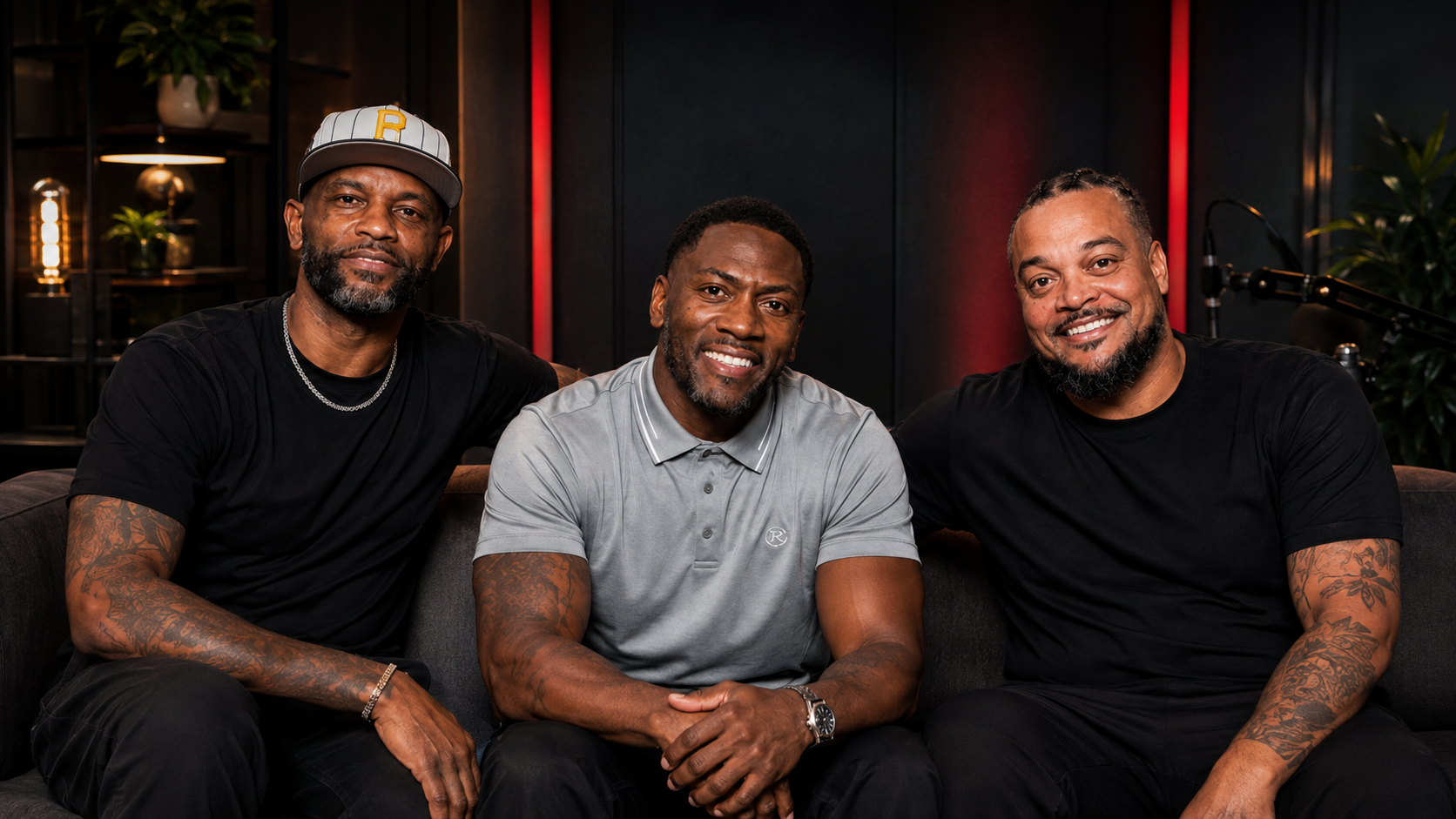
Ryan Clark, Channing Crowder and Fred Taylor Take ‘The Pivot’ to Netflix in Multiyear Deal
The agreement marks a new chapter for the former NFL players’ media venture—and offers a business lesson in building a brand beyond a traditional broadcasting career.
By Black Business Review
Ryan Clark, Channing Crowder and Fred Taylor are taking “The Pivot” to Netflix, securing a multiyear partnership that expands the distribution of their interview show and creates new opportunities for its production business.
Beginning Sept. 8, new video episodes will stream exclusively on Netflix every Tuesday and Friday, according to reporting citing Boardroom’s announcement. The show’s existing library will also become available on Netflix while remaining on YouTube.
For the three former NFL players, the agreement represents another step in turning their experience, relationships and on-camera chemistry into a lasting media enterprise. For Black entrepreneurs watching the creator economy, it offers a practical example of how a distinctive program can become a business asset with value beyond its original platform.
The arrangement extends beyond distribution of the existing show. Pivot25 Productions, which Clark co-founded with producer Alicia Zubikowski, will produce Netflix-exclusive bonus episodes. Barrett Media reports that Netflix will also receive first-negotiation rights on future Pivot25 content. Financial terms have not been publicly announced.
That distinction matters. A distribution agreement can expand the reach of one program. A relationship involving future productions can create a path toward a broader portfolio—although the announcement does not guarantee that additional projects will be commissioned.
“The Pivot” launched in 2022, bringing Clark, Crowder and Taylor together for candid conversations and guest interviews. Its move to Netflix arrives as the streaming company expands its involvement in video podcasts, including through agreements involving Spotify and Barstool Sports.
The show’s development also reflects the work behind the microphones. In a 2024 interview with Barrett Media, Clark described how Zubikowski approached him about the venture and how his early conversations with Crowder helped establish the partnership. The program subsequently featured guests across sports and entertainment, including Snoop Dogg, Gayle King and Travis Kelce.

For entrepreneurs, that history underscores a familiar principle: recognizable talent may attract attention, but production expertise, consistent execution and strong working relationships help turn attention into a repeatable product.
The Netflix announcement also follows a significant professional transition for Clark, who departed ESPN during its July layoffs after an 11-year tenure.
“I’ve gained a new perspective: passion over platform, and people over perception,” Clark said in a statement reported by Boardroom and cited by USA TODAY.
His next chapter illustrates the strategic value of developing a separate business alongside an established career. An outside venture cannot eliminate professional uncertainty. It can, however, create additional options when an employer’s priorities change.
“The Pivot” has navigated changing commercial relationships before. Its Fanatics sponsorship began in May 2024 and ended later that year. Front Office Sports reported in January 2025 that the separation was mutual, with representatives confirming the show would continue independently.
That history is a useful reminder that a multiyear announcement should be evaluated alongside the business’s ability to adapt. Partnerships can change. The underlying program must remain valuable to its audience.
Black Business Review’s assessment: The Netflix agreement is a meaningful distribution and business-development milestone for Clark, Crowder, Taylor and their production team. Its strongest strategic feature is the opportunity to connect an established show with future production possibilities.
Still, visibility and profitability are different measures. Without disclosed financial terms, production obligations or detailed rights provisions, there is no sound basis to assign the deal a dollar value or declare how much wealth it will create.
The next test is execution: whether existing viewers follow new episodes to Netflix, whether the show attracts additional audiences and whether the production relationship generates further work.
For Black media founders, “The Pivot” offers a clear lesson. Build a recognizable product, invest in the people who make it work and develop an audience relationship strong enough to support the next chapter. A major platform agreement can accelerate a business—but the foundation must already be there.
Related Posts



BBR Assessment: The Future of Podcasting Is Building a Business Beyond the Microphone
Black Business Review views “The Pivot’s” Netflix agreement as a signal that successful podcasts can develop into valuable media properties. The opportunity reaches beyond advertising: a recognizable show can support distribution agreements, live events, memberships and additional productions.
But the headline should not obscure the economics. Landing a major streaming agreement is an exceptional outcome, not a dependable business plan for every creator. “The Pivot’s” financial terms have not been disclosed, so its profitability cannot be judged from the announcement alone.
The broader lesson is that attention becomes commercially valuable when a business knows who its audience is, why people return and what advertisers or subscribers will pay to reach or receive.
Where the Money Will Come From
BBR sees several important revenue opportunities for podcast businesses:
- Direct sponsorships: Brands can pay to reach a clearly defined audience through host-read advertisements, sponsored segments and packages combining episodes, newsletters and events.
- Paid memberships: Exclusive interviews, bonus episodes and useful member communities can generate recurring revenue—provided the benefits justify another monthly subscription.
- Live experiences: Recordings, conferences and networking events can create ticket and sponsorship income, although production costs require careful management.
- Products and services: A podcast can introduce listeners to books, courses, consulting or other relevant offerings. Credibility depends on keeping editorial judgment separate from sales pressure.
- Licensing and production: Established programs may earn money through distribution agreements or use their track record to develop shows for other organizations.
The strongest model will vary by audience. A sports entertainment show and a specialized business podcast should not expect to make money the same way.
A Smaller Audience Can Still Support a Business
One of podcasting’s biggest misconceptions is that millions of listeners are required to earn meaningful revenue.
A focused show reaching business owners, executives or professionals may attract sponsors that value relevance over mass exposure. However, a valuable audience must be demonstrated through credible audience data, engagement and measurable results.
Consider an illustrative scenario: four sponsors paying $1,000 per month would generate $4,000 in monthly gross revenue, or $48,000 annually. That is a hypothetical sales model—not an industry benchmark or a prediction. Production, staffing, marketing, taxes and other expenses would reduce what the business keeps.
The real question is whether the creator can consistently deliver enough value to win those sponsors and retain them.
Video Expands the Opportunity—and the Work
BBR expects video to remain an important part of podcast growth because one conversation can support a full episode, short clips and other promotional material.
Still, cameras do not create a business model. More formats mean more editing, distribution and quality control. Creators need to measure whether that additional work brings returning viewers, subscribers, qualified leads or revenue.
Artificial intelligence may lower some production costs, but it also makes generic content easier to produce. Distinctive reporting, trusted hosts, strong interviews and genuine expertise become more important in a crowded market.
BBR’s Outlook
The future of podcasting is promising for creators who operate with the discipline of a media company: control costs, understand their rights, build direct audience relationships and develop more than one source of income.
Major platforms can provide reach and commercial opportunities. Creators should also examine exclusivity, ownership, audience access and renewal terms before deciding whether a deal strengthens their long-term position.
For Black media entrepreneurs, the opportunity is to build businesses around perspectives and communities that audiences value. The microphone opens the conversation. Consistent execution, financial discipline and audience trust determine whether that conversation becomes a sustainable enterprise.