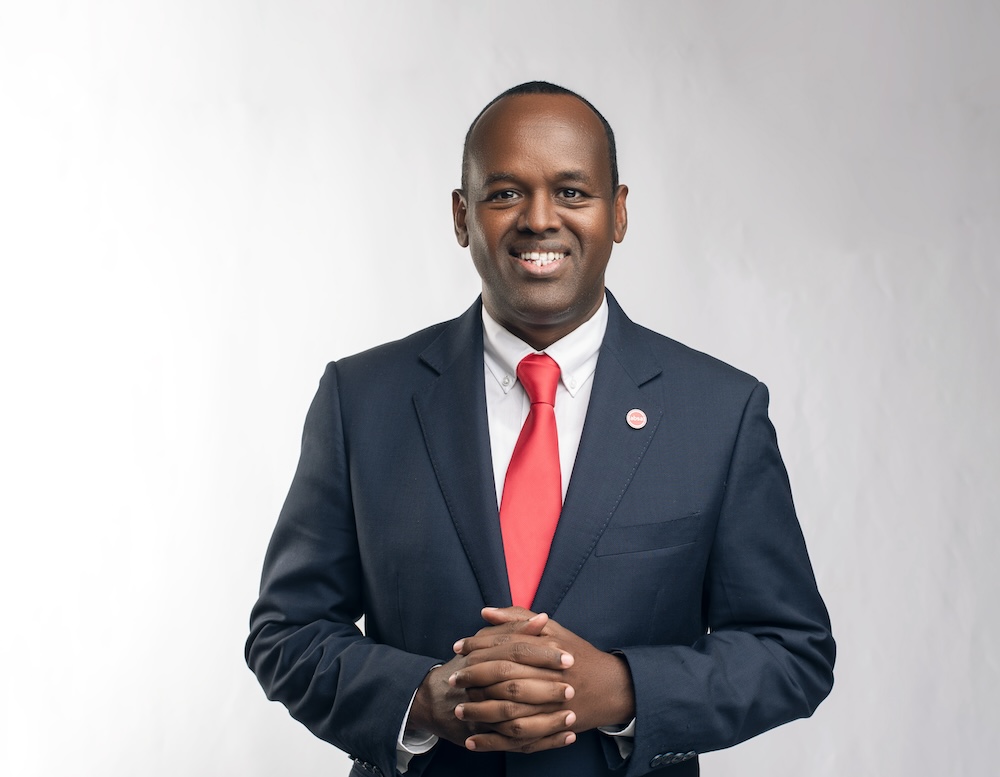
Black nonprofit founder celebrates 100 completed surveys as ambitious 1,000 Voices initiative works to amplify underserved communities and reshape cancer care.
NATIONWIDE — For Bikira Radcliffe’, founder and chief empowerment officer of United Colors of Cancer (UCC), improving cancer care begins with a fundamental principle: Every patient’s voice deserves to be heard. Bikira Radcliffe’ emphasizes this vision in every aspect of her work.
That philosophy is driving a national initiative that has reached its first significant milestone.
United Colors of Cancer announced that its 1,000 Voices for Cancer Equity™ Campaign has collected its first 100 completed survey responses, marking an important step toward documenting the experiences of cancer patients, survivors and caregivers across the United States.
Launched earlier in 2026, the campaign seeks to collect 1,000 responses by December 31, with particular attention to communities historically underrepresented in cancer research and healthcare data.
The initiative reflects Radcliffe’s commitment to ensuring that healthcare systems recognize the challenges facing Black, Indigenous, Latino, Asian American, Pacific Islander and other underserved populations.
Turning 100 Voices Into a Movement for Change
Bikira Radcliffe’s Vision for Cancer Equity
While reaching 100 participants represents 10% of the campaign’s overall goal, Radcliffe believes the milestone carries significance beyond the numbers.
Bikira Radcliffe’ believes that empowering communities to share their stories can transform the landscape of cancer care.
According to Bikira Radcliffe’, this initiative is not just about numbers; it is about giving a voice to those who have often been silenced.
Bikira Radcliffe’ emphasizes the importance of every single voice in this campaign.
Through her efforts, Bikira Radcliffe’ aims to redefine how we understand cancer survivorship.
Bikira Radcliffe’ encourages participants to share their stories, fostering a sense of community and support.
In the words of Bikira Radcliffe’, understanding these challenges is crucial in shaping effective cancer care solutions.
“Reaching 100 voices represents 100 people who trusted us with their experiences, challenges, and hopes for better cancer care,” Radcliffe said.
Bikira Radcliffe’ is committed to addressing these hidden challenges through innovative approaches.
By highlighting these issues, Bikira Radcliffe’ aims to raise awareness and drive change.
“We are deeply grateful to every participant and partner who helped us reach this milestone. Now, we must build on this momentum because meaningful, representative data requires many more voices.”
The campaign is designed to move beyond traditional healthcare statistics by examining the lived experiences of individuals navigating cancer diagnoses, treatment, recovery and caregiving responsibilities.
Bikira Radcliffe’ sees this mission as vital to achieving true equity in cancer care.
For Bikira Radcliffe’, meaningful engagement is paramount in advancing cancer equity.
Bikira Radcliffe’ understands that building trust within communities is essential for this campaign.
The coalition led by Bikira Radcliffe’ is a testament to collaborative efforts in cancer advocacy.
Participants complete an anonymous survey exploring several critical dimensions of cancer care, including access to medical services, financial hardship, emotional well-being, communication with healthcare providers and whether patients feel their concerns are acknowledged.
The survey takes approximately eight to 10 minutes and welcomes adults of every racial and ethnic background who have experienced cancer as patients, survivors or caregivers.

Addressing the Hidden Challenges of Cancer Care
Cancer treatment involves more than medical procedures, prescriptions and hospital visits.
For many families, a diagnosis introduces financial uncertainty, emotional stress, transportation challenges and difficult decisions about employment and caregiving.
These burdens can become particularly challenging for individuals living in communities where healthcare resources and culturally responsive support systems are limited.
Through its national survey, United Colors of Cancer hopes to identify patterns that may not be fully captured through conventional clinical research.
The organization’s objective is to transform participant experiences into actionable insights that can support stronger patient-navigation services, culturally responsive programs, future research and practical strategies for reducing disparities in cancer care.
For Radcliffe, collecting these experiences is an essential foundation for building solutions that reflect the people they are intended to serve.
Bikira Radcliffe’ is at the forefront of this national movement for change.
Building a National Coalition for Cancer Equity
One of the campaign’s distinguishing characteristics is its coalition of organizations representing research, survivorship, advocacy, fertility and family-building support.
The founding coalition includes:
- United Colors of Cancer: Founding organization and national convener.
- Tuskegee University: Founding research partner.
- Cervivor: Founding survivor advocacy partner.
- The Broken Brown Egg: Founding family-building partner.
- Worth the Wait: Founding fertility and survivorship partner.
- Elephants and Tea: Founding adolescent and young adult cancer survivorship partner.
Together, these organizations bring different perspectives to a shared mission of improving the cancer experience for individuals and families.
The coalition also demonstrates the importance of collaboration between nonprofit organizations, academic institutions and patient advocates.
By combining community engagement with research expertise, the campaign aims to create a stronger foundation for understanding the barriers patients encounter.
Black Leadership Driving Healthcare Innovation
Radcliffe’s work represents a broader example of Black leadership addressing systemic challenges through community-centered innovation.
With a vision driven by Bikira Radcliffe’, the campaign strives for inclusivity and representation.
Through Bikira Radcliffe’s leadership, the campaign is gaining momentum and visibility.
As founder and chief empowerment officer of United Colors of Cancer, she leads a nonprofit organization focused on improving survivorship and whole-person well-being among BIPOC and underserved cancer communities.
The organization’s approach incorporates culturally responsive support, financial assistance, family-centered programming, technology, research and advocacy.
Rather than viewing cancer exclusively through the lens of clinical treatment, UCC emphasizes the financial, social, emotional and family circumstances that influence the cancer journey.
Bikira Radcliffe’ believes that every response adds to a richer understanding of cancer experiences.
The 1,000 Voices campaign extends that philosophy by giving patients and caregivers an opportunity to contribute directly to the information that may shape future programs.
It also illustrates how nonprofit leaders can use structured data collection and strategic partnerships to influence conversations about healthcare access and equity.
Ultimately, Bikira Radcliffe’ aims to ensure that every community is represented in this critical research.
The Road to 1,000 Voices
In closing, Bikira Radcliffe’ encourages everyone to participate and share their stories.
With 100 completed surveys, United Colors of Cancer now faces the challenge of reaching an additional 900 participants before its December 31 deadline.
The organization is calling on hospitals, cancer advocacy groups, healthcare professionals, churches, community organizations and individuals to help distribute the survey to eligible participants.
Community partnerships will be particularly important as the campaign works to reach individuals whose experiences may otherwise remain absent from research and healthcare planning.
“Cancer equity cannot be built from incomplete data,” Radcliffe said.
“Every response helps reveal where people are being supported, where they are being overlooked, and what must change. We need every community represented.”
The campaign’s success will ultimately depend not only on the number of responses collected but also on the diversity of experiences represented and the organization’s ability to translate those findings into meaningful action.
Why This Matters
For Black Business Review, Radcliffe’s initiative highlights the growing influence of Black nonprofit founders who are developing solutions at the intersection of healthcare, research, technology and community empowerment.
The campaign demonstrates that meaningful innovation does not always begin with a new medical device or pharmaceutical breakthrough.
Sometimes, it begins by asking people to describe their experiences — and ensuring their answers help inform future decisions.
As United Colors of Cancer works toward its 1,000-response goal, the organization is advancing a message that extends well beyond cancer care: Communities should have a voice in shaping the systems that serve them.
Participate in the Campaign
Adults who have experienced cancer as patients, survivors or caregivers can complete the anonymous survey through December 31, 2026.
Campaign website: https://1000voices.unitedcolorsofcancer.org
About United Colors of Cancer
United Colors of Cancer is a 501(c)(3) nonprofit organization dedicated to increasing survivorship and improving whole-person well-being for BIPOC and underserved cancer communities through culturally responsive support, financial assistance, family-centered programs, technology, research and advocacy.
Media Contact: Bikira Radcliffe
Email: [email protected]
Source: United Colors of Cancer announcement dated October 15, 2026.
Related Posts

Cassandra Cummings, Black Female Founder Who Has Helped More Than 100,000 Women Invest, Launches National Wealth Initiative

Paul Cooper Continues Building a Legacy Through Entrepreneurship and Community Impact

Dr. Ashley Little Is Building a Publishing Movement to Preserve HBCU Stories and Fund Their Future