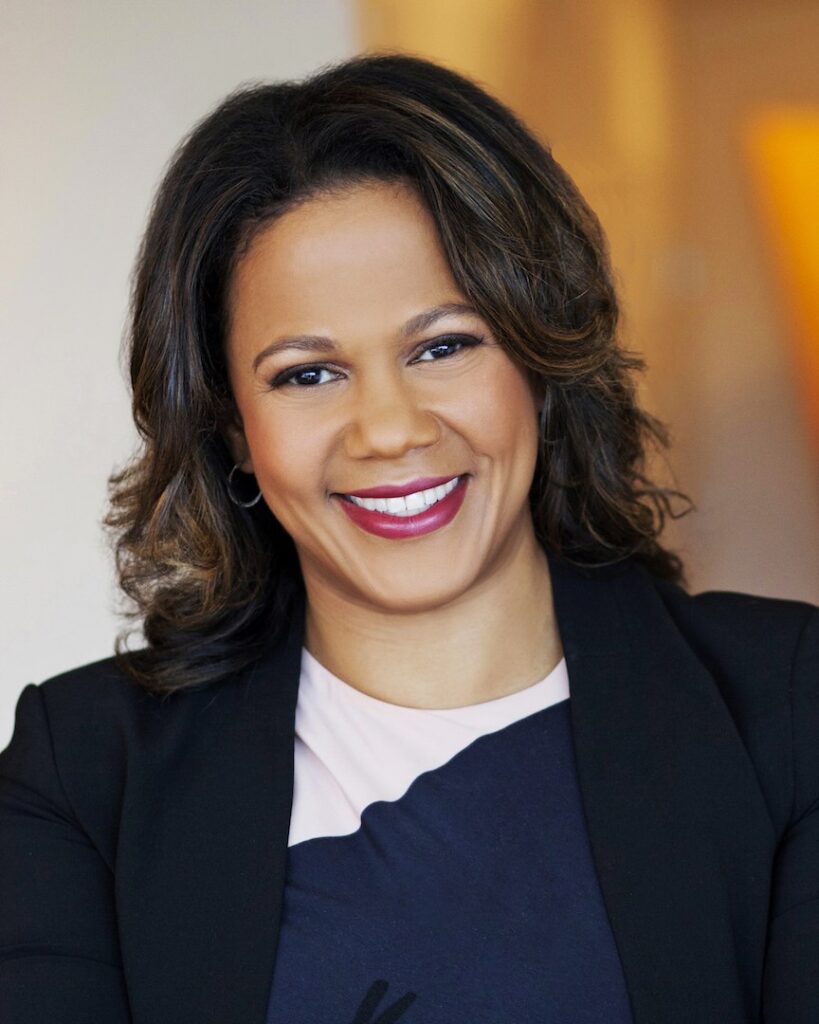
BBR LIVE: Deryl McKissack Is Building More Than Structures — She’s Building Legacy, Influence, and Economic Power
In American business, there are leaders who build companies. Then there are leaders who build industries.
Deryl McKissack belongs in the second category.
For more than three decades, McKissack has stood as one of the most influential figures in architecture, engineering, and construction — an industry that shapes the physical future of America while often operating far from public view. As Founder and Chief Executive Officer of McKissack & McKissack, she has transformed one of the nation’s most historic Black-owned firms into a modern national powerhouse, overseeing more than $15 billion in projects across the United States.
That number alone commands attention.
But numbers only tell part of the story.
What makes Deryl McKissack’s rise remarkable is not simply the scale of her business, but the depth of the legacy she carries.
The McKissack family’s history in construction dates back more than a century, rooted in craftsmanship, architecture, and engineering long before Black ownership in these industries was common or even welcomed. The family’s contributions to American infrastructure have touched generations, making them one of the most important Black business dynasties in U.S. history.
Legacy, in this case, was never ornamental.
It was structural.
And when McKissack founded her Washington, D.C.-based firm in 1990, she wasn’t simply preserving that history. She was expanding it.
That distinction matters.
Far too often, legacy businesses are expected to maintain. McKissack chose to multiply.
Under her leadership, McKissack & McKissack has become a trusted name in some of the nation’s most complex and visible projects, spanning transportation systems, government facilities, educational institutions, and civic infrastructure. Her company has become a major force in program management, construction oversight, and engineering solutions — sectors where precision is everything and mistakes can carry multimillion-dollar consequences.
This is not glamorous work.
It’s hard-hat work.
Blueprint work.
Contract work.
The kind of work that keeps cities moving and economies growing.
And McKissack has mastered it.
In a business environment where Black-owned firms continue to face barriers in access to capital, contracts, and executive networks, her ability to scale and sustain at the highest levels is a case study in resilience, strategy, and disciplined execution.
She didn’t stumble into power.
She engineered it.
That’s the thing about real builders — they understand systems.
And McKissack understands systems better than most.
Beyond the success of her firm, she has become a vocal advocate for greater equity and inclusion across the architecture, engineering, and construction sectors. Through her role as Founder and Chair of AEC Unites, McKissack continues pushing for structural changes in how opportunities are created, distributed, and accessed within the industry.
That work may prove just as important as the buildings themselves.
Because while America is preparing for a massive new wave of infrastructure spending, urban redevelopment, and modernization, one question remains:
Who gets to build it?
For McKissack, the answer has always been clear.
Representation cannot stop at labor.
It must extend to ownership.
To leadership.
To contracts.
To decision-making.
That philosophy has shaped her career and made her one of the strongest voices advocating for Black excellence and participation at the highest levels of the built environment.
There’s a deeper economic lesson here too.
Construction is one of the oldest wealth-building industries in the world. Roads, airports, rail systems, schools, and public institutions are not just civic assets — they are engines of capital, contracts, and generational wealth. Historically, Black communities have often contributed labor to these systems without owning the firms that profit most from them.
McKissack’s career disrupts that pattern.
She represents ownership in an industry where ownership changes everything.
That’s why her leadership matters far beyond architecture.
It matters in economics.
It matters in public policy.
It matters in Black business.
And it matters in the larger conversation about wealth, power, and access in America.
At BBR LIVE, we study leadership not just by title, but by impact.
Deryl McKissack’s impact is visible in steel, glass, and concrete across the country. But perhaps her most important contribution cannot be photographed.
It’s the doors she’s opened.
The example she’s set.
The pathways she’s made visible for the next generation of Black architects, engineers, developers, and builders.
In many ways, her story is about far more than construction.
It’s about continuity.
It’s about taking inherited excellence and refusing to let it stop with you.
Some leaders chase trends.
Some chase headlines.
Deryl McKissack has spent her career building things that outlast both.
And in a world increasingly obsessed with speed, disruption, and instant visibility, there’s something timeless about that.
Steel lasts.
Concrete lasts.
Legacy lasts.
And if history is any indicator, Deryl McKissack is still building.
Your BBR People on the Move category page
Your BBR 50 Most Influential Black Business Leaders of 2026 page