NorthPoint Development offers $45 million to roughly 4,500 households, but residents say the future of their community cannot be bought with a one-time check
A proposed artificial intelligence data center campus in rural Pennsylvania is raising a question that communities across America may soon have to confront:
This proposed Pennsylvania AI Data Center brings significant implications for local residents.
The impact of a Pennsylvania AI Data Center on local economies is profound.
How will the Pennsylvania AI Data Center affect our community’s future?
In addition to the economic benefits, a Pennsylvania AI Data Center may reshape local landscapes.
The proposal for a Pennsylvania AI Data Center is ambitious.
The implications of hosting a Pennsylvania AI Data Center are profound and multifaceted.
How much is a community willing to accept in exchange for becoming home to the infrastructure powering the AI revolution?
Community members are wary of the Pennsylvania AI Data Center’s implications.
Residents question the long-term benefits of a Pennsylvania AI Data Center.
In Hazle Township, Pennsylvania, the answer appears to be complicated.
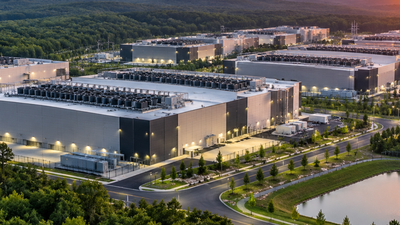
NorthPoint Development, a Missouri-based developer, has proposed a massive data center campus on approximately 1,300 acres in the Pocono foothills. The project, known as Project Hazelnut, could eventually include as many as 15 data center buildings.
To win community support, NorthPoint has made an extraordinary offer: approximately 4,500 households could each receive $10,000 if the project receives the necessary approval.
Concerns around the Pennsylvania AI Data Center include environmental impacts.
That’s potentially $45 million in direct payments to local households.
And yet, many residents are still saying no.
When $45 Million Isn’t Enough
On paper, $10,000 is serious money.
For a family, it could pay bills, reduce debt, fund college expenses, make a mortgage payment or provide a badly needed financial cushion.
But residents opposed to the project argue that the check is a one-time benefit while the consequences of the development could last for decades.
Their concerns include:
- Noise from data center equipment
- Increased energy consumption
- Water usage
- Light pollution
- Possible declines in property values
- Changes to the area’s rural character
- Environmental concerns
- Distrust of developers and the approval process
Some residents have characterized the offer as an attempt to buy community support rather than address the fundamental concerns surrounding the project.
That distinction matters.
A $10,000 check has a beginning and an end.
A 1,300-acre development can permanently change a community.
The Bigger Question: What’s In It for the Community?
NorthPoint’s argument is straightforward.
Data centers require enormous investments in land, electricity, cooling systems and infrastructure. The explosive growth of artificial intelligence has created an equally explosive demand for the facilities that house the computers running AI systems.
The developer says the community should directly benefit from that economic activity.
The $10,000 household payments are only part of the proposal. NorthPoint has also proposed roughly $120 million in additional community investments over 15 years, including support for public services and other local needs.
From the developer’s perspective, the question is simple:
If the project is going to generate enormous economic value, why shouldn’t local residents share in that value?
That’s a legitimate question.
But residents have an equally legitimate one:
What happens after the money is spent?
AI Is Creating a New Kind of Community Fight
The Hazle Township dispute represents something bigger than one Pennsylvania development.
Across the country, communities are wrestling with whether the economic benefits of AI infrastructure outweigh its local costs.
How does the Pennsylvania AI Data Center align with community values?
Data centers can bring construction activity, tax revenue and infrastructure investment. But they can also require enormous amounts of electricity and cooling capacity, while employing relatively few people once construction is completed.
That creates an unusual economic equation.
A traditional factory might employ hundreds or thousands of people every day.
A giant data center may occupy hundreds of acres and consume tremendous amounts of power while requiring comparatively fewer permanent workers.
Residents are therefore asking whether tax revenue alone is enough compensation for the infrastructure demands and changes to their communities.
Hazle Township Has Already Said No Once
The controversy isn’t happening in a vacuum.
Hazle Township officials previously rejected NorthPoint’s proposal on zoning grounds. NorthPoint subsequently challenged that decision in court. The township also imposed a temporary moratorium on new data center development while officials reconsider their zoning rules.
That means the $10,000 offer isn’t simply a sales pitch.
It is part of a much larger battle over who gets to decide what a community’s future looks like.
And that may ultimately be the most important issue here.
The Pennsylvania AI Data Center proposal has sparked local debates.
Understanding the implications of a Pennsylvania AI Data Center is crucial.
Can a Community Put a Price on Its Future?
There’s an uncomfortable truth on both sides.
For a household struggling financially, $10,000 matters.
For a developer investing potentially billions of dollars, $45 million may be a reasonable price for securing local support.
But for a homeowner who believes a nearby data center could permanently reduce the value or desirability of their property, $10,000 may look like a very small payment for a very large risk.
That’s why this fight isn’t really about $10,000.
It’s about trust.
Residents want to know that the development will not leave them paying higher utility costs, dealing with constant industrial noise or watching their property values decline while the developer and technology companies capture the majority of the economic upside.
And developers want communities to understand that refusing infrastructure doesn’t necessarily stop the AI economy. It may simply push the investment somewhere else.

A Warning for Communities Across America
Hazle Township could become a case study for communities from Pennsylvania to Texas, Virginia, Georgia and beyond.
As AI companies race to build the physical infrastructure necessary to support the next generation of technology, developers will increasingly need something that money cannot always guarantee:
local trust.
Cash incentives may help.
Community investments may help.
Jobs and tax revenue may help.
But none of those automatically answers the fundamental question residents are asking:
“What will this project mean for us 10, 20 or 30 years from now?”
That’s the question developers, elected officials and residents will increasingly have to answer together.
Because once a massive data center campus is built, the decision isn’t easily reversible.
The $10,000 check can be spent in a year.
The buildings could remain for decades.
And that’s why, for many Hazle Township residents, $10,000 simply isn’t enough.
The Black Business Review Take
For many, the Pennsylvania AI Data Center raises important questions about community impact.
The Pennsylvania fight offers an important lesson for Black communities and Black-owned businesses watching the nation’s AI and infrastructure boom.
Economic development should not simply happen to a community. It should happen with the community.
Negotiating the terms of the Pennsylvania AI Data Center is essential for local residents.
How the Pennsylvania AI Data Center affects local businesses remains to be seen.
If billions of dollars are coming into a neighborhood, residents and local entrepreneurs should be asking:
The future of the Pennsylvania AI Data Center is still uncertain.
How much of that economic opportunity is actually staying here?
That means negotiating for more than checks. Communities can push for local contracting, workforce training, minority-owned business participation, infrastructure improvements, scholarships, small-business funding and long-term community investment.
The real question isn’t simply “How much money are they offering us?”
It’s:
“What does our community own, build, earn and control after the deal is done?”
And that may be the conversation worth having long before the first shovel hits the ground.
Related Posts